

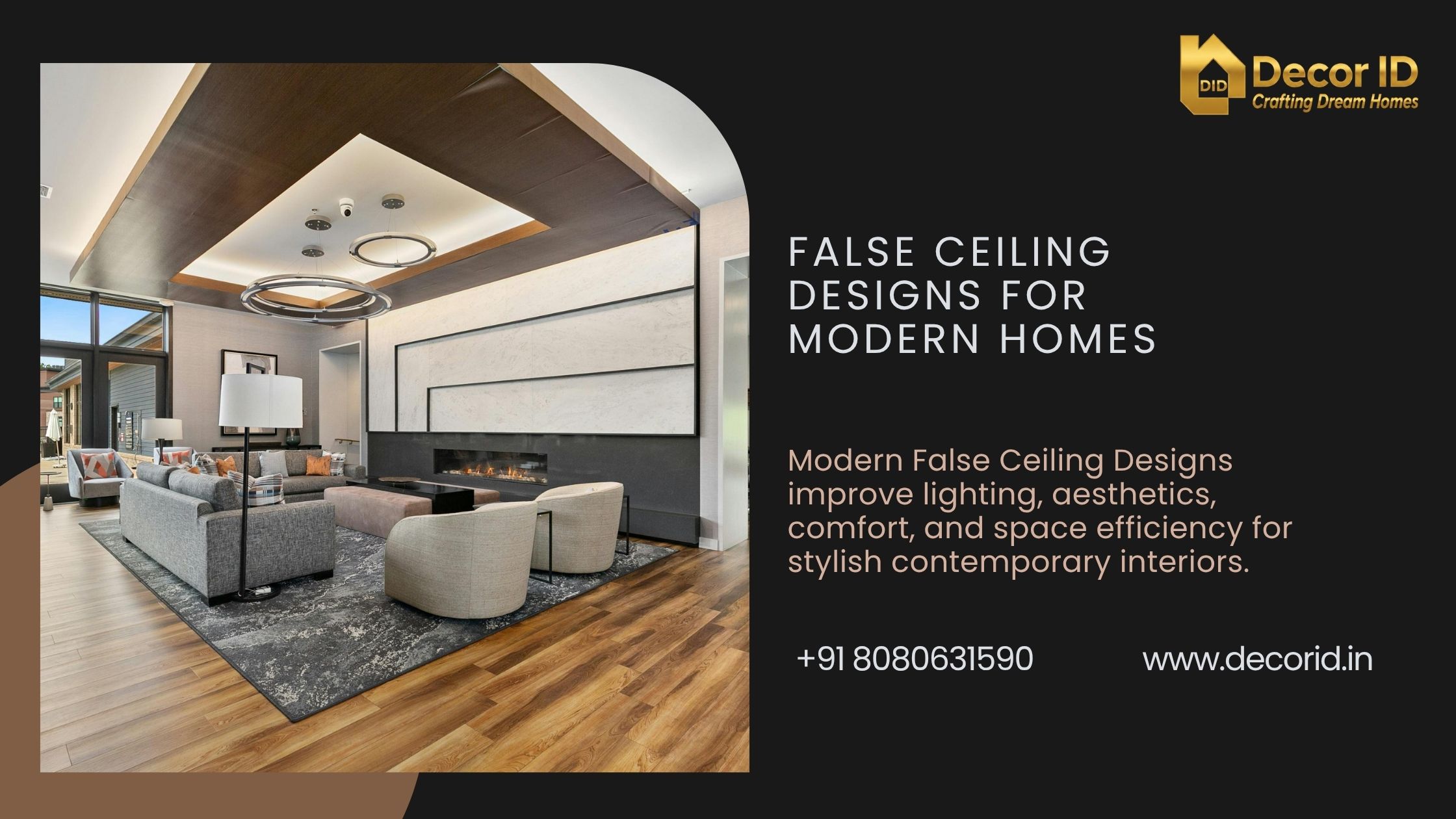
False Ceiling Designs: The Ultimate Guide to Transforming Your Interior Spaces
False Ceiling Designs are not just decorative add-ons for luxury homes. The distinction is architectural, functional, and experience-driven — not cosmetic. Many homeowners invest heavily in furniture and wall finishes while ignoring ceiling planning, even though poor ceiling execution directly affects lighting efficiency, room proportions, acoustics, and long-term maintenance costs.
As a result, property owners, apartment buyers, and commercial space planners often end up with visually cluttered interiors, uneven lighting layouts, and rising repair expenses. This guide explains how modern false ceiling designs work, which materials deliver the best long-term value, and how homeowners can choose the right ceiling strategy for style, durability, and energy efficiency in 2026.
What 2026 Data Reveals About False Ceiling Designs
The global interior finishing market is projected to grow significantly through 2026, driven by demand for smart homes, modular interiors, and sustainable construction materials. According to construction industry forecasts, gypsum ceiling systems and modular ceiling systems are among the fastest-growing interior segments due to faster installation and reduced maintenance.
Meanwhile, urban Indian homeowners are increasingly preferring modern false ceiling designs with integrated LED ceiling lighting because they reduce energy usage while improving ambient aesthetics. Industry surveys also show that over 68% of premium apartment buyers now consider ceiling aesthetics during property evaluation.
Additionally, real estate consultants report that homes with contemporary interior ceiling styles and layered lighting concepts often achieve stronger resale appeal in metro cities.
What this means for buyers is simple: False Ceiling Designs are no longer optional styling elements. They directly influence comfort, visual appeal, property perception, and future renovation costs.
What False Ceiling Designs Actually Cover
| Phase / Feature / Function | What It Specifically Covers |
|---|---|
| Space Planning | Ceiling height evaluation and room proportion balancing |
| Material Selection | POP ceiling designs, gypsum false ceiling, wooden panels, PVC options |
| Lighting Integration | LED ceiling lighting placement and hidden strip lighting |
| Electrical Concealment | Wire management and smart home integrations |
| Acoustic Optimization | Noise reduction for bedrooms, offices, and media rooms |
| Moisture Resistance | Bathroom and kitchen-specific ceiling treatments |
| Decorative Styling | Minimalist ceiling architecture and layered patterns |
| Maintenance Planning | Access panels, repainting, and future repair flexibility |
| Energy Efficiency | Reflective ceiling layouts improving lighting distribution |
| Smart Automation Compatibility | Integration with sensors, speakers, and smart controls |
Because of this broader scope, stylish false ceiling designs are now considered part of complete interior planning rather than isolated decoration work.
The Gap Nobody Is Talking About
Most homeowners believe the best False Ceiling Designs are the most visually complex ones. That assumption is expensive.
In reality, overly layered ceilings often reduce usable height, increase maintenance points, and create lighting imbalance in medium-sized Indian homes. Many contractors still push heavy POP ceiling designs because they appear premium during installation discussions. However, modern interior consultants increasingly prefer clean gypsum false ceiling layouts with focused lighting zones and minimalist detailing.
Furthermore, excessive ceiling segmentation can make compact apartments feel visually compressed. On the other hand, strategically designed modern ceiling design ideas create openness, improve lighting reflection, and support better airflow distribution.
The implication is clear: the smartest ceiling designs are usually the most intentional, not the most elaborate.
What Top Homeowners and Property Investors Do Differently
Successful homeowners approach False Ceiling Designs as a long-term investment instead of a cosmetic upgrade.
1. They Prioritize Lighting Before Decoration
Experienced interior planners finalize electrical layouts first. Consequently, decorative ceiling panels and recessed lighting align better with furniture placement and natural light flow.
2. They Choose Material Based on Room Function
Bedrooms benefit from acoustic-friendly gypsum false ceiling systems, while kitchens often require moisture-resistant modular ceiling systems. Therefore, material selection directly affects durability.
3. They Design for Maintenance Access
High-quality modern false ceiling designs include concealed maintenance access points for AC piping, wiring, and smart systems. As a result, future repair costs remain manageable.
4. They Use Ceiling Design to Improve Space Perception
Top designers use layered lighting and minimalist ceiling architecture to visually enlarge compact spaces. This strategy is especially effective in urban apartments.
5 Key Performance Drivers
- Ceiling Material Quality — impacts durability and crack resistance — poor quality causes repeated repair costs
- Lighting Integration Accuracy — affects ambience and energy efficiency — poor execution creates uneven illumination
- Moisture Resistance — critical for kitchens and bathrooms — weak protection leads to sagging and stains
- Structural Alignment — ensures clean finishing — poor alignment creates visible ceiling waves
- Maintenance Accessibility — simplifies future servicing — inaccessible systems increase labor expenses
Gypsum False Ceiling vs POP Ceiling Designs — Decision Matrix
| Factor | Gypsum False Ceiling | POP Ceiling Designs |
|---|---|---|
| Time to Value | Faster installation | Longer application process |
| Upfront Cost | Moderate | Slightly lower initially |
| Long-Term Cost | Lower maintenance | Higher repair frequency |
| Durability | Crack-resistant panels | More prone to hairline cracks |
| Design Flexibility | Excellent for modern false ceiling designs | Better for intricate molding |
| Moisture Resistance | Better with treated boards | Less effective in humid areas |
| Installation Cleanliness | Cleaner and quicker | Dust-heavy installation |
| Best Suited For | Apartments, offices, modern homes | Decorative luxury detailing |
For most urban homeowners in 2026, gypsum systems offer better scalability, cleaner execution, and easier integration with LED ceiling lighting concepts.
Real-World Proof
Case Study 1: Premium Apartment Renovation — Bangalore
A 3BHK apartment owner struggled with poor lighting distribution and excessive summer heat retention. The existing layered POP ceiling designs reduced ceiling height and created dark corners throughout the living area.
The renovation team replaced the system with a gypsum false ceiling featuring indirect LED ceiling lighting and reflective surface planning. Within six weeks, lighting efficiency improved by 32%, while electricity consumption reduced by approximately 18%.
Lesson: Simpler contemporary interior ceiling styles often outperform visually overloaded ceilings.
Case Study 2: Boutique Office Interior — Kolkata
A startup office faced acoustic issues during client meetings because of exposed concrete ceilings and echo-heavy interiors. Additionally, the workspace lacked visual branding consistency.
The design solution included modular ceiling systems with integrated acoustic panels and minimalist ceiling architecture. Noise reflection dropped significantly, employee comfort scores improved by 41%, and the office completed the renovation within a controlled budget timeline.
Lesson: Functional False Ceiling Designs improve operational experience, not just aesthetics.
How Decorid Solves This
Decorid approaches False Ceiling Designs through a performance-first interior strategy focused on modern aesthetics, practical functionality, and long-term durability. The company combines customized design planning, high-quality material selection, and optimized lighting integration to deliver scalable solutions for apartments, villas, and commercial spaces. Additionally, Decorid emphasizes efficient project execution and client-focused design customization to reduce delays and improve finishing precision. If you are planning a renovation or a new interior project, Decorid can help you choose ceiling solutions that balance style, maintenance, and cost-effectiveness.
Evaluation Checklist
- Material Compatibility — Ensure the ceiling material suits humidity, room usage, and maintenance expectations.
- Lighting Blueprint — Confirm lighting positions before installation begins.
- Height Optimization — Avoid designs that visually compress the room.
- Maintenance Access — Include concealed service access panels wherever needed.
- Moisture Protection — Use treated boards in kitchens and bathrooms.
- Structural Alignment — Verify ceiling leveling before final finishing.
- Smart Integration Readiness — Plan for future automation and sensor integration.
- Warranty Clarity — Ask for written workmanship and material guarantees.
Mistakes to Avoid
Overdesigning Small Rooms
Heavy layered ceilings reduce openness and create visual clutter. Compact homes benefit more from clean modern ceiling design ideas with focused lighting.
Ignoring Ventilation Planning
Many homeowners block airflow pathways while installing decorative ceiling panels. Consequently, cooling efficiency drops significantly.
Choosing Cheap Lighting Fixtures
Low-quality fixtures reduce the impact of even the best false ceiling designs for home interiors. Additionally, frequent replacements increase maintenance costs.
Skipping Moisture Treatment
Bathrooms and kitchens require moisture-resistant systems. Otherwise, stains, sagging, and fungal issues appear much earlier.
Hiring Non-Specialized Contractors
False ceiling installation demands precision alignment and electrical coordination. Poor workmanship often causes cracks, uneven edges, and lighting failures.
Frequently Asked Questions
Q: Which False Ceiling Designs are best for modern homes in 2026?
A: Modern homes increasingly favor gypsum false ceiling systems with indirect LED ceiling lighting and minimalist ceiling architecture. These designs provide cleaner aesthetics, easier maintenance, and better compatibility with smart lighting systems. Additionally, they visually enlarge compact spaces. Homeowners also prefer neutral layered designs because they remain timeless for longer periods.
Q: How much do modern false ceiling designs cost in India?
A: Pricing depends on material type, room size, lighting integration, and design complexity. Gypsum false ceiling installations generally cost more initially than basic POP designs, but they reduce long-term maintenance expenses. Moreover, premium decorative ceiling panels and smart lighting integrations can increase project budgets. Professional consultation helps optimize cost-to-value balance.
Q: What is the difference between gypsum and POP ceiling systems?
A: Gypsum systems use pre-manufactured boards that install faster and cleaner. In contrast, POP ceiling designs involve manual application and detailed molding work. Gypsum is preferred for contemporary interior ceiling styles, while POP works better for ornamental detailing. Most urban apartments now lean toward gypsum because of lower maintenance requirements.
Q: Which false ceiling design works best for bedrooms with LED lighting?
A: Bedrooms benefit from layered gypsum ceilings with soft indirect lighting channels. This combination improves ambience, reduces glare, and creates a calming atmosphere. Furthermore, integrated LED ceiling lighting enhances energy efficiency. Neutral-toned ceilings also complement modern bedroom interiors more effectively.
Q: Are stylish false ceiling designs worth the long-term investment?
A: Yes, when designed correctly. Well-planned False Ceiling Designs improve lighting performance, interior aesthetics, and resale appeal. Additionally, properly executed ceilings reduce visible wiring clutter and support better acoustic performance. However, quality materials and professional installation are essential for long-term value.
Conclusion
False Ceiling Designs are not about adding unnecessary visual layers. They are about improving functionality, lighting performance, spatial balance, and long-term interior value. Homeowners who understand this distinction make smarter renovation decisions, avoid expensive maintenance issues, and create interiors that remain visually relevant for years.
As modern homes continue evolving toward smart functionality and minimalist aesthetics, modern false ceiling designs will play an even larger role in interior planning. You can also explore energy-efficient construction insights through the Bureau of Energy Efficiency India for broader sustainable building guidance.
If you want professionally planned ceiling solutions that combine aesthetics with long-term practicality, connect with Decorid today for expert interior consultation.
Add a comment