

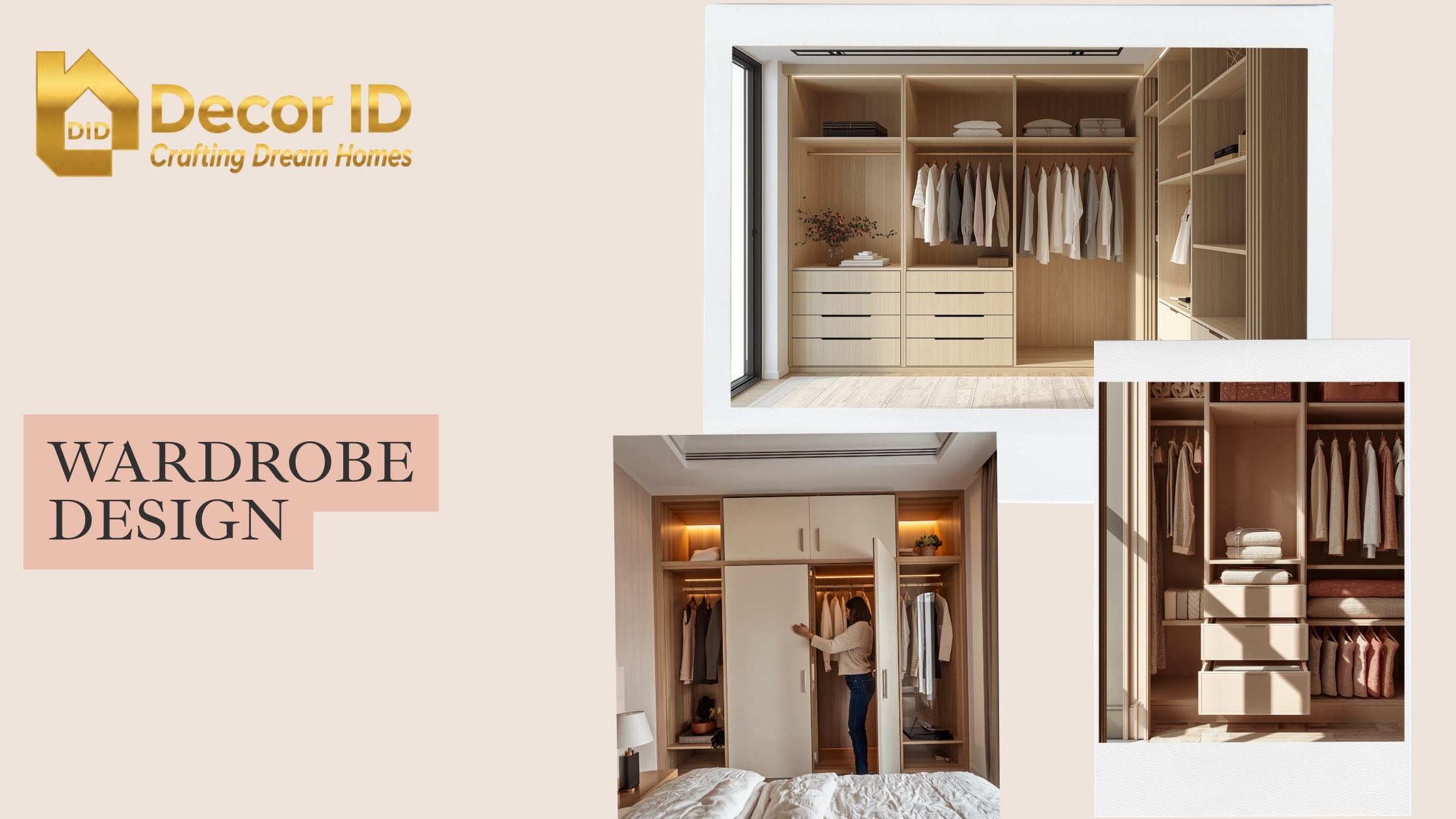
7 Wardrobe Design Mistakes That Make Your Room Look Smaller (And How to Fix Them)
Wardrobe Design is not just about adding storage to a bedroom. The distinction is spatial efficiency and visual balance — not simply cabinet installation.
Likewise, modern wardrobe design is not defined by expensive laminates or decorative handles. It is defined by how intelligently the wardrobe interacts with room dimensions, lighting, movement, and usable space.
Homeowners who misunderstand this often end up with cramped bedrooms, poor storage flow, dark corners, and wasted floor area. In compact urban homes, especially in cities like Patna, the wrong wardrobe design for bedroom layouts can reduce both comfort and property appeal.
This guide explains the biggest wardrobe design mistakes, how space-saving wardrobe design principles solve them, and what homeowners should evaluate before investing in modular wardrobe solutions in 2026.
What 2026 Data Reveals About Wardrobe Design
According to the India Brand Equity Foundation (IBEF), demand for modular home interiors has increased significantly due to urban apartment growth and shrinking average bedroom sizes in metro and Tier-2 cities. More homeowners are now prioritizing custom wardrobe storage and floor-to-ceiling wardrobe systems to maximize utility.
Meanwhile, a 2025 Houzz Interior Trends survey revealed that over 62% of homeowners renovating bedrooms cited “lack of efficient storage” as their biggest frustration. Sliding wardrobe design installations increased because they reduce door clearance issues in compact layouts.
Another report from Statista showed that Indian consumers are increasingly preferring modular wardrobe solutions over carpenter-made furniture because of predictable timelines, better finish consistency, and optimized space planning.
What this means for homeowners is simple: wardrobe planning is now a functional investment decision, not merely a decorative choice.
What Wardrobe Design Actually Covers
| Phase / Feature / Function | What It Specifically Covers |
|---|---|
| Room Measurement Planning | Wall dimensions, ceiling height, movement clearance |
| Storage Zoning | Daily wear, seasonal wear, accessories, luggage |
| Sliding Wardrobe Design | Space optimization in compact bedrooms |
| Hinged Wardrobe Systems | Accessibility and storage visibility |
| Floor-to-Ceiling Wardrobe | Vertical storage maximization |
| Wardrobe Color Combinations | Light reflection and room perception |
| Internal Accessories | Drawers, pull-outs, organizers, loft storage |
| Lighting Integration | LED strips, shadow reduction, visibility |
| Modern Wardrobe Interiors | Minimalist layouts with functional segmentation |
| Walk-In Wardrobe Planning | Traffic flow and storage ergonomics |
| Material Selection | MDF, plywood, laminates, moisture resistance |
| Custom Wardrobe Storage | Personalized configurations for user lifestyle |
This full-cycle approach is why modern wardrobe design projects now overlap with interior planning, real estate value optimization, and lifestyle engineering.
The Gap Nobody Is Talking About
Most homeowners believe that adding “more storage” automatically improves a bedroom. That assumption is wrong.
The real issue is not storage quantity. It is storage positioning.
Many carpenter-built wardrobes consume visual width, block natural light, interrupt walking paths, and create heavy visual mass inside already compact rooms. As a result, bedrooms feel smaller even when storage increases.
This is precisely why modular wardrobe solutions are replacing traditional carpenter work in many urban homes. The shift is not driven only by aesthetics. It is driven by spatial intelligence, precision manufacturing, and long-term usability.
The implication is clear: poor wardrobe planning silently reduces both comfort and usable square footage.
What Top Homeowners Do Differently
1. They Prioritize Vertical Storage
Experienced homeowners increasingly prefer floor-to-ceiling wardrobe systems because unused upper-wall space wastes valuable storage potential. Vertical planning also reduces clutter outside wardrobes.
As a result, bedrooms appear cleaner and visually taller.
2. They Choose Sliding Wardrobe Design for Tight Layouts
In compact apartments, hinged shutters require door clearance that reduces usable movement space. Sliding wardrobe design eliminates this issue.
Therefore, smaller bedrooms maintain better circulation and functionality.
3. They Use Light Wardrobe Color Combinations
Dark laminates absorb light and visually shrink the room. However, neutral shades, matte whites, warm beige, and reflective finishes create openness.
This strategy works especially well in small bedroom wardrobe design projects.
4. They Design Storage Around Lifestyle
High-performing wardrobe design ideas now focus on user behavior instead of generic shelf distribution. Families with children, working professionals, and couples all require different layouts.
Consequently, custom wardrobe storage improves daily convenience significantly.
5 Key Performance Drivers That Impact ROI
- Storage Efficiency — Maximizes usable organization — Poor planning creates clutter overflow.
- Material Durability — Impacts lifespan and maintenance cost — Low-grade boards swell quickly.
- Visual Space Management — Affects room perception — Bulky wardrobes shrink bedrooms visually.
- Hardware Quality — Determines long-term functionality — Cheap channels fail prematurely.
- Installation Precision — Ensures structural alignment — Poor execution reduces durability and aesthetics.
Wardrobe Design Mistakes vs Smart Modular Planning — Decision Matrix
| Factor | Traditional Carpenter Wardrobe | Modular Wardrobe Solutions |
|---|---|---|
| Time to Completion | 20–45 days | 7–15 days |
| Finish Consistency | Depends on carpenter skill | Factory precision finish |
| Space Optimization | Often inefficient | Engineered for compact layouts |
| Durability | Variable | Standardized material quality |
| Future Modifications | Difficult | Easier customization |
| Dust & Site Mess | High | Minimal |
| Design Visualization | Limited | 3D planning available |
| Best Suited For | Basic low-budget projects | Modern urban homes |
This comparison explains why many Patna homeowners are now shifting toward modular wardrobe solutions instead of relying entirely on traditional carpentry.
Real-World Proof
Case Study 1 — Apartment Renovation in Patna
A 2BHK apartment owner in Patna struggled with a cramped 10×11 bedroom where a bulky hinged wardrobe consumed walking space. The room lacked natural openness, despite having sufficient square footage.
After replacing the old unit with a sliding wardrobe design featuring mirrored shutters and vertical compartments, usable movement space improved by approximately 28%.
The homeowner also reported significantly better organization and lighting reflection.
Lesson: Smart wardrobe design ideas improve both functionality and spatial perception simultaneously.
Case Study 2 — Compact Residential Project in Ranchi
A young working couple required modern wardrobe interiors for a compact master bedroom in Ranchi. Their earlier carpenter-built wardrobe had uneven shelving and dead storage areas.
The redesigned floor-to-ceiling wardrobe integrated loft storage, segmented accessories, and matte neutral wardrobe color combinations. Installation time reduced from an estimated 30 days to just 11 days.
Storage utilization increased by nearly 35%.
Lesson: Precision-led modular wardrobe solutions outperform traditional methods in compact homes.
7 Wardrobe Design Mistakes That Make Your Room Look Smaller
1. Choosing Dark Laminates Everywhere
Heavy dark shades absorb light and visually compress bedroom dimensions. Although dark wardrobes may appear luxurious initially, they often overwhelm smaller rooms.
Instead, choose lighter wardrobe color combinations that reflect light naturally.
2. Ignoring Vertical Space
Many homeowners stop wardrobes below ceiling height. Consequently, upper-wall dead space remains unused while clutter accumulates elsewhere.
Floor-to-ceiling wardrobe planning solves both storage and visual balance issues.
3. Using Oversized Handles
Large protruding handles make compact bedrooms feel crowded. Moreover, they interrupt sleek visual continuity.
Minimal-profile hardware creates cleaner modern wardrobe design aesthetics.
4. Poor Internal Segmentation
Without proper shelf planning, storage becomes chaotic quickly. Generic compartments rarely match real user behavior.
Custom wardrobe storage configurations improve usability dramatically.
5. Blocking Natural Light
Positioning wardrobes near windows without considering shadow flow makes rooms darker and visually tighter.
Therefore, wardrobe placement should always align with natural lighting patterns.
6. Choosing Hinged Doors in Tight Spaces
Hinged shutters require clearance zones that reduce movement flexibility. In small layouts, this becomes highly inconvenient.
Sliding wardrobe design is often the smarter solution.
7. Prioritizing Looks Over Function
Some homeowners focus only on decorative laminates while ignoring accessibility and organization. However, beautiful wardrobes with poor usability become frustrating quickly.
Functional planning must always lead visual styling.
How Decorid Solves This
Decorid approaches wardrobe design through space engineering rather than generic furniture installation. Unlike traditional carpenter-based execution, Decorid uses modular planning, optimized layouts, and precision manufacturing to improve storage efficiency and visual spaciousness. The company’s structured process, faster delivery timelines, and intelligent customization have contributed to why many Patna homeowners are shifting toward modular interiors instead of conventional carpentry methods. If you want a wardrobe design for bedroom layouts that improves both storage and space perception, Decorid offers consultation-driven solutions tailored for modern urban homes.
Book a free wardrobe consultation with Decorid today and discover how much usable space your bedroom is actually losing.
Evaluation Checklist
- Room Dimension Accuracy — Ensure exact wall and ceiling measurements before design approval.
- Storage Behavior Analysis — Evaluate how your family actually uses storage daily.
- Hardware Warranty — Verify channels, hinges, and sliders have proper warranty coverage.
- Material Moisture Resistance — Essential for long-term durability in Indian climates.
- Lighting Compatibility — Confirm wardrobe placement supports room brightness.
- Future Storage Expansion — Choose layouts that remain functional over time.
- Movement Clearance — Test walking space after wardrobe door operation.
- Visual Balance — Ensure wardrobe mass does not overpower the room.
Mistakes to Avoid
- Copying Pinterest Designs Blindly
Many online wardrobe design ideas ignore actual room dimensions. Therefore, imported aesthetics often fail in Indian apartment layouts. - Using Cheap Sliding Hardware
Low-quality sliders deteriorate quickly under daily usage. Consequently, shutters become noisy and misaligned. - Ignoring Ventilation Planning
Poor airflow inside wardrobes causes odor buildup and moisture issues. Ventilation slots are often overlooked unnecessarily. - Overdesigning Small Bedrooms
Excessive textures, patterns, and contrasting colors create visual clutter. Minimalism generally performs better in compact spaces. - Hiring Without Layout Visualization
Without 3D previews, homeowners struggle to understand final spatial impact. Visualization reduces expensive revisions later.
Frequently Asked Questions
Q: What is the best wardrobe design for compact apartments in 2026?
A: Space-saving wardrobe design concepts are dominating compact apartment interiors in 2026. Sliding wardrobe design systems, vertical storage planning, and light wardrobe color combinations are particularly effective. Additionally, modular wardrobe solutions improve organization while minimizing wasted space. Homeowners are increasingly prioritizing functionality over decorative excess.
Q: How can wardrobe design make a small bedroom look bigger?
A: The right wardrobe design for bedroom layouts improves visual openness by reducing clutter and improving light reflection. Floor-to-ceiling wardrobe systems create vertical continuity, while lighter finishes prevent visual heaviness. Moreover, sliding shutters eliminate unnecessary movement obstruction. Together, these strategies create the perception of a larger room.
Q: Sliding wardrobe vs hinged wardrobe — which saves more space?
A: Sliding wardrobe design generally saves more usable movement space because shutters do not swing outward. Hinged wardrobes require clearance zones that reduce flexibility in compact rooms. However, hinged wardrobes may provide slightly wider access visibility. The final decision depends on room size and layout efficiency.
Q: Which wardrobe colors make a room feel more spacious?
A: Neutral and reflective wardrobe color combinations usually perform best. Shades like matte white, beige, ash grey, and light wood finishes reflect more light and create openness. In contrast, overly dark wardrobes visually compress compact bedrooms. Therefore, lighter palettes are recommended for small bedroom wardrobe design projects.
Q: Are modular wardrobe solutions better than carpenter-made wardrobes?
A: Modular wardrobe solutions offer better finish consistency, faster installation, cleaner execution, and more precise storage optimization. Traditional carpenter work may appear cheaper initially, but inconsistency and inefficiency often increase long-term costs. Additionally, modular systems provide superior design visualization before installation begins.
Conclusion
Wardrobe Design is not about fitting more furniture into a bedroom. It is about improving how space functions, feels, and adapts to everyday living. When homeowners ignore layout logic, lighting interaction, and movement flow, even expensive wardrobes can make rooms feel smaller and more uncomfortable.
Modern wardrobe design strategies now prioritize spatial efficiency, modular precision, and long-term usability over outdated bulky construction methods. As compact urban homes continue to dominate residential real estate, smart wardrobe planning becomes increasingly critical.
For official housing and urban development insights, homeowners can review residential planning resources from the Ministry of Housing and Urban Affairs, Government of India.
If you are planning a bedroom upgrade, connect with Decorid to explore modern wardrobe solutions designed for smarter living in 2026.
Add a comment