

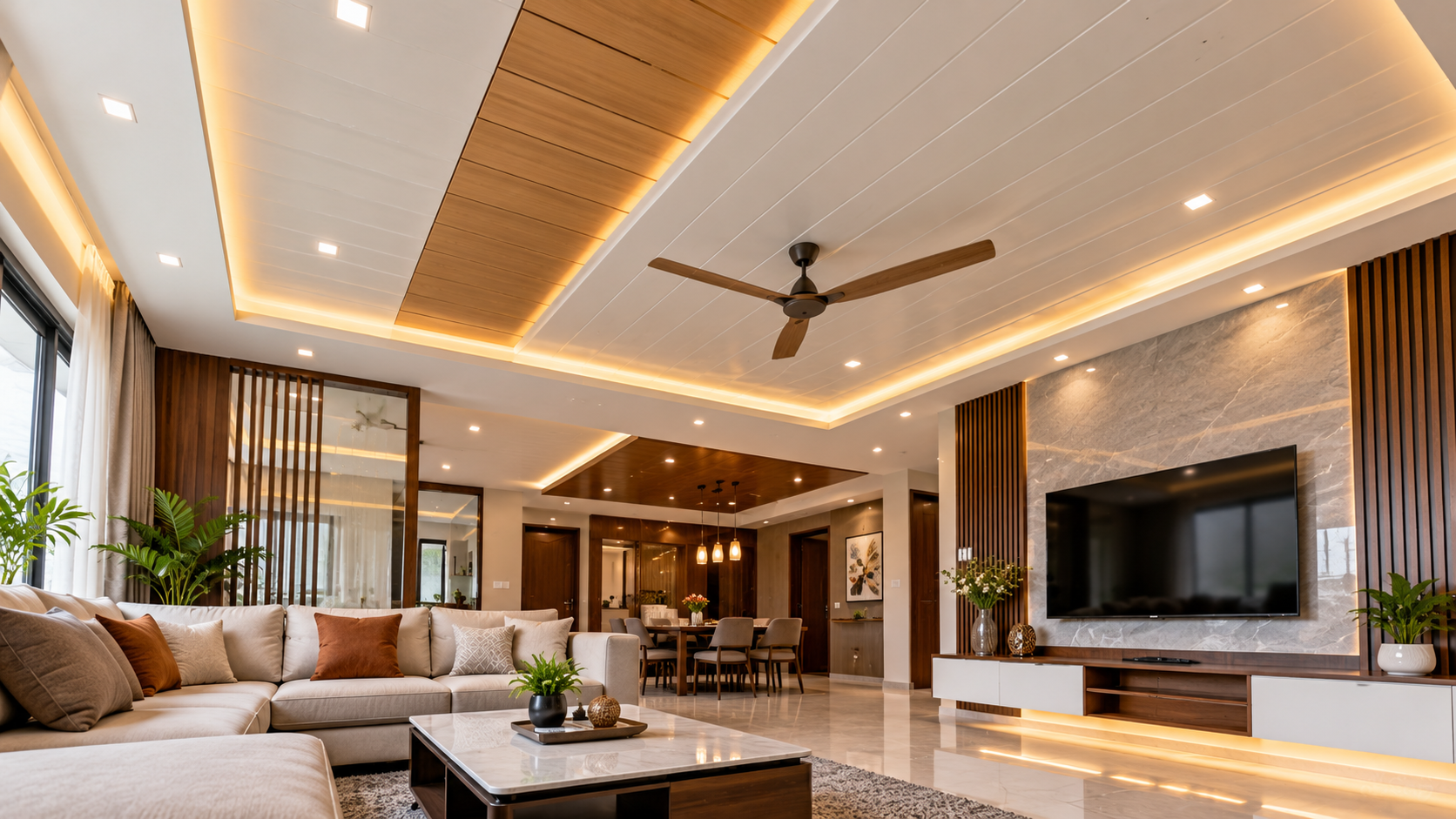
PVC Ceiling Tiles: Designs, Benefits, Costs and Installation Tips for Indian Homes
When planning a home interior, the ceiling deserves as much attention as the walls, flooring, and furniture. The right ceiling finish can create a clean appearance, coordinate with lighting, and help a room feel complete. PVC ceiling tiles offer one option for homeowners who want a decorative ceiling with relatively simple surface maintenance.
However, PVC is not the right choice for every room. Heat exposure, fire-safety requirements, ceiling height, lighting design, and the quality of the supporting framework all influence the result.
If you are comparing ceiling materials for a new home or renovation, this guide explains how PVC ceiling tiles work, which designs you can consider, where they perform best, and what to check before installation.
What Are PVC Ceiling Tiles?
PVC ceiling tiles are decorative ceiling products made from polyvinyl chloride, a type of plastic. Depending on the product, manufacturers offer individual tiles, long interlocking panels, textured surfaces, and printed finishes.
Installers generally attach these products to a suitable supporting framework beneath the original ceiling. The resulting space can accommodate selected wiring and building services when the design allows proper access.
PVC ceiling products come in various colours, patterns, thicknesses, and surface finishes. Some create a simple, functional look, while others imitate wood grain or stone-inspired textures.
Before buying, confirm the exact product type. Solid PVC tiles, hollow PVC panels, PVC-laminated boards, and other composite products have different properties. Do not assume that every product offers the same strength, fire performance, or installation requirements.
Popular PVC Ceiling Tile Designs for Modern Homes
The best PVC ceiling design complements the room’s existing materials and lighting rather than competing with them.
1. Plain White PVC Ceiling Tiles
Plain white panels suit simple interiors and utility spaces. They coordinate easily with neutral walls, light-coloured cabinets, and understated furniture.
A white finish may also help maintain a bright appearance in a compact room. Consider a matte surface if you prefer a more subtle look than a high-gloss finish.
2. Wood-Look PVC Ceiling Panels
Wood-look PVC panels bring warmth to a ceiling without using solid timber throughout the installation. Depending on the product, finishes may resemble oak, walnut, teak, or other wood grains.
These designs can complement covered balconies, selected bedroom features, and contemporary living spaces. Check sample panels in the actual room lighting because printed wood patterns can look different under warm and cool lights.
3. Decorative and Textured PVC Tiles
Embossed patterns, geometric lines, and decorative textures can create a stronger visual feature. These designs work best when the rest of the room uses relatively simple finishes.
For smaller rooms, avoid overly busy patterns that may make the ceiling feel visually crowded.
4. Marble-Look and Glossy PVC Panels
Some PVC products imitate marble or feature reflective surfaces. They may suit interiors that use polished flooring, light walls, or modern decorative elements.
However, glossy panels can highlight reflections, joints, and surface imperfections. Review a physical sample before selecting the finish for a large ceiling.
5. PVC Ceiling Panels with Coordinated Lighting
Some panel systems can accommodate selected LED fixtures or linear lighting arrangements. The exact options depend on the panel design and supporting framework.
Plan lighting, wiring, and access points before installation. Do not cut panels or fit lights without checking the manufacturer’s requirements for support, heat clearance, and electrical safety.
Benefits of PVC Ceiling Tiles
PVC ceiling tiles can offer several practical advantages when the selected product suits the room and the installer follows the correct procedure.
Moisture Resistance
Many PVC products resist moisture and do not absorb water in the same way as paper-faced materials. This property can make suitable PVC panels useful in selected humid environments.
However, a moisture-resistant panel does not repair a leaking roof or pipe. Fix the source of water before covering the ceiling, and confirm the suitability of the complete ceiling system.
Easy Surface Cleaning
Many PVC surfaces need only dusting and occasional cleaning with a soft cloth. This can make routine maintenance simpler than maintaining a painted finish that requires periodic repainting.
Always follow the product manufacturer’s cleaning instructions. Abrasive pads and unsuitable chemicals can damage decorative surfaces.
Variety of Finishes
PVC products offer a range of colours, patterns, and textures. This gives homeowners options for coordinating ceiling finishes with flooring, cabinets, furniture, and wall colours.
Relatively Quick Installation
Interlocking PVC panels can allow a straightforward installation when the room and supporting framework suit the product.
The actual timeline depends on room dimensions, framework preparation, electrical work, panel cutting, and finishing requirements. A complicated design may take longer than a basic utility-room ceiling.
Potentially Convenient Service Access
Some panel systems allow installers to remove individual panels for access to wiring or other services above the ceiling.
This benefit depends on the fixing system. Plan removable sections or access panels in advance instead of assuming every PVC ceiling will open easily.
Limitations of PVC Ceiling Tiles You Should Know
A useful buying decision considers disadvantages as well as benefits.
Fire performance: PVC is not equivalent to a non-combustible ceiling material. Product formulations vary, and PVC can produce hazardous smoke when it burns. Check documented fire-performance information and local building requirements before selecting it.
Heat sensitivity: Excessive heat can deform or discolour some PVC panels. Keep the ceiling clear of unsuitable heat sources and follow requirements around cooking appliances, chimneys, lights, and electrical equipment.
Visible joints: Interlocking panels usually show seams. This appearance differs from the smooth, continuous finish that a properly installed and painted gypsum ceiling can provide.
Impact damage: Some PVC panels can crack or dent when struck. Product thickness and construction affect their resistance to damage.
Appearance variation: Low-quality printing or glossy finishes may look less convincing than expected. Inspect samples and finished installations before committing to a design.
These limitations do not make PVC unsuitable in every situation. They simply mean that the product should match the room’s conditions and design goals.
Which Rooms Are Suitable for PVC Ceiling Tiles?
The correct application depends on product specifications, room conditions, and installation quality.
| Room or area | Suitability | What to check |
|---|---|---|
| Bathroom | Can suit selected applications | Moisture exposure, ventilation, product specification |
| Kitchen | Requires careful selection | Heat sources, hob clearance, chimney and lighting arrangements |
| Utility room | Often worth considering | Cleaning, access to services, support spacing |
| Covered balcony | Depends on exposure | Sunlight, temperature, rain exposure and outdoor suitability |
| Bedroom | Depends on design preference | Appearance, fire performance, lighting and comfort |
| Living room | Depends on the desired finish | Visible joints, design quality and lighting integration |
| Commercial space | Project-specific | Fire requirements, building rules and maintenance access |
For kitchens, avoid placing PVC panels near excessive heat or open flames. In bathrooms, maintain effective ventilation and repair leaks before installation.
For living rooms and bedrooms where a seamless, premium appearance matters, compare PVC with gypsum or other suitable ceiling materials before making a final decision.
PVC Ceiling Tiles vs Gypsum vs POP
PVC, gypsum, and plaster of Paris (POP) each serve different design requirements.
| Feature | PVC ceiling tiles | Gypsum ceiling | POP ceiling |
|---|---|---|---|
| Typical finish | Panel-based | Smooth and continuous | Smooth or decorative |
| Design flexibility | Depends on available panels | Good for modern layouts | Good for custom shapes and mouldings |
| Moisture suitability | Depends on product specification | Depends on board type and exposure | Generally unsuitable for persistent dampness |
| Lighting integration | Depends on panel system | Flexible with planning | Flexible with planning |
| Surface maintenance | Often straightforward | May require repainting | May require repair and refinishing |
| Repair access | Some panels allow removal | May require cutting if sealed | Depends on construction |
| Best use | Selected utility and moisture-exposed spaces | Many living rooms and bedrooms | Decorative ceiling designs |
PVC can be practical where easy cleaning and a panel finish are priorities. Gypsum often suits smooth, contemporary ceilings with integrated lighting. POP can work well when the design requires curves, mouldings, or custom decorative details.
No single material wins in every category. Choose according to room conditions, desired appearance, maintenance needs, and total installed cost.
How Much Do PVC Ceiling Tiles Cost?
The cost of PVC ceiling tiles varies with panel quality, thickness, design, finish, supplier, and installation requirements. Material prices alone do not represent the complete project cost.
An installed quotation may include:
- PVC panels or tiles
- Supporting framework and fixing accessories
- Labour and cutting
- Edge trims and finishing
- Lighting provisions and electrical work
- Transportation and applicable taxes
For a useful comparison, ask the installer to provide an itemised quotation based on measured ceiling dimensions. Confirm whether lighting, electrical work, framework, and finishing appear in the quoted rate.
Avoid relying on a single generic price per square foot. Local labour, product grade, room geometry, and site conditions can change the final cost. Compare quotations that include the same materials and scope of work.
PVC Ceiling Installation Checklist
Good installation affects the appearance, stability, and serviceability of the finished ceiling.
Step 1: Inspect the Original Ceiling
Look for leakage, dampness, loose plaster, cracks, and other defects. Resolve active water ingress and structural concerns before installing a new ceiling.
Step 2: Measure the Room
Measure the ceiling area and identify beams, pipes, lights, ventilation points, and other obstructions. Accurate measurements help reduce unnecessary cutting and material waste.
Step 3: Confirm the Supporting Framework
The installer should select a suitable framework and follow the panel manufacturer’s requirements for support spacing, anchoring, and fixing. Poor support can cause panels to sag or separate.
Step 4: Plan Lighting and Wiring
Finalise the electrical layout before closing the ceiling. Confirm the compatibility of light fixtures, clearances, wiring routes, and access provisions.
Step 5: Fit the Panels
Installers should align and secure panels according to the product instructions. They should also finish edges neatly and avoid damaging the panel joints.
Step 6: Inspect the Finished Work
Check panel alignment, visible gaps, loose sections, edge trims, and lighting operation. Make sure the installation leaves planned service access available.
Maintenance Tips and Common Mistakes
PVC ceilings generally need routine surface cleaning, but homeowners should still inspect them periodically.
- Remove dust with a soft cloth or suitable cleaning tool.
- Use only cleaning products approved for the finish.
- Check for loose panels, sagging, and damaged joints.
- Investigate stains that may indicate a leak above the ceiling.
- Keep electrical fixtures and planned service access points accessible.
- Avoid excessive heat and follow the manufacturer’s care instructions.
Common mistakes include choosing panels based only on appearance, ignoring fire requirements, installing over an unresolved leak, using inadequate framework, and deciding on lighting after the panels have already gone up.
A little planning before installation can prevent avoidable rework and help the ceiling fit the rest of the interior.
How DecorID Can Help with Ceiling and Interior Planning
DecorID provides interior design and execution services in Patna, including false-ceiling and lighting work. Its website describes a planning process that considers layouts, materials, lighting, finishes, and implementation requirements.
When planning a ceiling upgrade, it helps to coordinate the ceiling with furniture placement, room proportions, lighting, wall finishes, and the overall interior theme. This approach can reduce conflicts between design choices and on-site requirements.
Explore DecorID’s false ceiling and lighting services to learn about ceiling planning and lighting coordination. You can also read its complete false ceiling installation guide for more information about materials, installation, and project preparation.
If you are planning a broader home renovation, DecorID’s interior design services provide information about space planning, 2D drawings, 3D visualisation, and material selection.
Discuss your room dimensions, preferred finish, lighting requirements, and budget before finalising the ceiling material.
Frequently Asked Questions About PVC Ceiling Tiles
1. Are PVC ceiling tiles suitable for Indian homes?
Yes, PVC ceiling tiles can suit selected residential spaces when their specifications match the room’s heat, moisture, and fire-safety requirements. Consider both the product and the complete installation before choosing them.
2. Are PVC ceiling tiles waterproof?
Many PVC products resist water, but the performance of the complete ceiling depends on the panel, joints, edges, and installation. Water resistance does not remove the need to repair leaks or manage condensation.
3. Can PVC ceiling tiles be installed in a kitchen?
They can suit some kitchen applications, but installers must consider heat exposure, cooking appliances, ventilation, lights, and product specifications. Keep panels away from unsuitable heat sources and follow the manufacturer’s clearance requirements.
4. Are PVC ceiling tiles better than gypsum?
Neither material is universally better. PVC may suit applications that prioritise straightforward cleaning and a panel-based finish. Gypsum often suits rooms where homeowners want a smooth, continuous surface and integrated lighting.
5. How much do PVC ceiling tiles cost per square foot?
The price depends on product quality, panel thickness, finish, supplier, framework, labour, and additional work. Request an itemised, site-specific quotation to understand the complete installed cost.
6. Can PVC ceiling tiles support LED lights?
Some PVC ceiling systems can accommodate suitable LED fixtures. The installer must confirm the panel system’s support capacity, fixture compatibility, heat clearance, and electrical requirements.
7. How long do PVC ceiling tiles last?
Their service life varies with product quality, sunlight exposure, heat, support spacing, and maintenance. Ask the supplier about the specific product’s expected performance and warranty rather than relying on a universal lifespan.
8. Can damaged PVC ceiling tiles be replaced?
Some interlocking systems allow individual panels to be removed and replaced. The process depends on the fixing arrangement and surrounding panels, so confirm repair access during installation.
Conclusion
PVC ceiling tiles can provide a practical, decorative finish for selected home interiors. Their variety of designs and relatively straightforward surface maintenance make them worth considering, particularly when the product matches the room’s environmental conditions.
Before choosing a ceiling, compare PVC with gypsum and POP, assess the heat and fire requirements, plan the lighting, and confirm that the installer will use the correct supporting framework.
The best result comes from balancing appearance, safety, maintenance, and budget—not simply selecting the cheapest panel. With proper planning, homeowners can choose a ceiling that complements their interiors and supports everyday use.
If you are planning a ceiling upgrade, explore DecorID’s false ceiling and lighting services and discuss the requirements of your space before making a final decision.
Add a comment