

Materials and Textures in Interior Design: A Complete Guide for Your Home
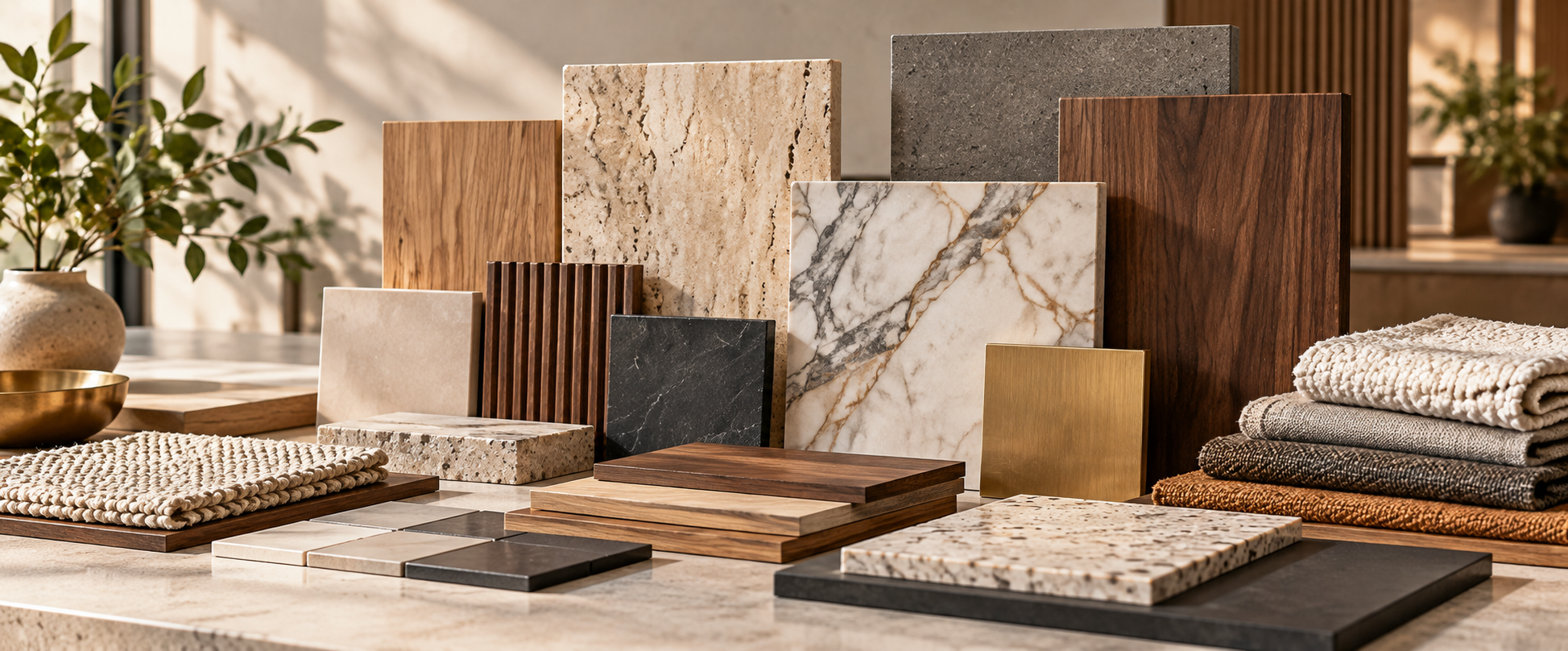
Materials and textures in interior design shape how a room looks, feels, and performs. First, materials such as wood, stone, glass, metal, and fabric give a space its structure and character. In addition, texture adds depth, comfort, and visual interest, even when the color palette stays simple. However, a beautiful finish is not always a practical one, so good design balances style, durability, and upkeep. This guide explains the main interior design materials, how texture works, how to mix finishes, and how to choose for your home.
What Are Materials and Textures in Interior Design?
Materials are the physical substances used to build and finish a space, such as timber, tiles, stone, glass, metal, paint, and textiles. Texture, on the other hand, is how a surface looks and feels. For example, a polished marble floor feels smooth and cool, while a jute rug feels coarse and warm.
What Is the Difference Between Visual and Tactile Texture?
| Type | What it means | Example |
|---|---|---|
| Tactile texture | The surface can be felt by touch | Wool throw, brushed metal, rough plaster |
| Visual texture | The surface looks textured but may feel smooth | Wood-grain laminate, printed wallpaper, patterned tiles |
Therefore, designers often use both types together to build depth without making a room feel heavy.
Why Do Materials and Textures Matter?
- First, they set the mood. Warm woods and soft fabrics feel cozy, while glass and polished metal feel sleek.
- Second, they affect comfort, since soft surfaces absorb sound and hard surfaces reflect it.
- Also, they change how light behaves. Glossy finishes bounce light around, whereas matte finishes soften it.
- In addition, they influence how large a room feels. Smooth, light-colored surfaces can open up a small space.
- Moreover, they decide how long a surface lasts and how much care it needs.
- Finally, they bring personality, because even a neutral room feels rich when its textures vary.
Which Interior Design Materials Are Most Common?
| Material | Key qualities | Best for |
|---|---|---|
| Solid wood | Warm, durable, ages well; needs care in humid or damp areas | Furniture, doors, flooring, accents |
| Plywood (including BWP) | Strong and more moisture resistant than basic boards | Cabinets, wardrobes, kitchens, bathrooms |
| HDHMR and MDF boards | Smooth and consistent; HDHMR resists moisture better than MDF | Wardrobes, paneling, cabinet shutters |
| Laminates and veneers | Wide choice of colors and grains; budget friendly | Cabinet shutters, wall panels, furniture |
| Marble | Elegant, cool, and veined; can stain or scratch | Floors, countertops, feature walls |
| Granite and quartz | Hard, heat resistant, and low maintenance | Kitchen counters and vanities |
| Ceramic, porcelain, and vitrified tiles | Durable, easy to clean, many designs | Floors, walls, bathrooms |
| Glass | Reflects light, creates openness | Partitions, shelves, backsplashes, tabletops |
| Metal (brass, steel, iron) | Strong, modern, and sleek or rustic | Handles, frames, lighting, accents |
| Fabric and textiles | Soft, adds warmth and sound absorption | Sofas, curtains, rugs, cushions |
| Leather | Rich and durable; develops character | Seating and accents |
| Cane, rattan, and bamboo | Light, natural, and airy | Furniture, screens, pendant lights |
| Paint and wall finishes | Color and texture on walls and ceilings | All rooms |
| Concrete and cement finishes | Raw, industrial, and strong | Floors, counters, feature walls |
| Acrylic and PU finishes | Glossy or smooth, easy to clean | Modern cabinets and furniture |
As a result, most homes use a mix of several materials instead of just one.
How Do Wood and Engineered Wood Compare?
Wood brings warmth, so many homeowners choose it for floors, doors, and furniture. However, solid wood can swell or warp in damp conditions if it is not treated well. Therefore, engineered options such as plywood, HDHMR, and MDF are common in cabinets and wardrobes.
| Option | Strengths | Trade-offs |
|---|---|---|
| Solid wood | Natural beauty and long life | Higher cost, needs seasoning and care |
| BWP plywood | Good moisture resistance and strength | Costs more than basic boards |
| HDHMR | Dense, smooth, and moisture resistant | Less suited to very heavy loads without proper design |
| MDF | Smooth surface and budget friendly | Weaker around water and humidity |
How Do Stone and Tile Differ?
Stone adds luxury and character. For example, marble looks elegant in living rooms, while granite and quartz handle the heat and wear of kitchens. Meanwhile, tiles offer a huge range of looks and are easier to install and replace. Moreover, large-format tiles can reduce grout lines, which makes small rooms feel more open.
Because polished surfaces can become slippery when wet, choose matte or anti-skid finishes for bathrooms, balconies, and entrances.
How Do Metal and Glass Add Contrast?
Metal and glass bring sleekness. For instance, brass handles or a steel frame can add a refined accent against warm wood. In addition, glass partitions and shelves let light travel through a room. However, glass shows fingerprints and metal can tarnish, so match them to the amount of upkeep you accept.
How Do Fabrics and Textiles Soften a Room?
Textiles are the fastest way to add comfort. First, curtains and rugs soften sound. Next, cushions and throws add color and pattern. Also, upholstery brings texture to seating. Because fabrics wear differently, check durability. For example, tightly woven cotton blends handle daily use better than delicate silks.
What Types of Texture Can You Use?
| Texture | Feels like | Effect on the room |
|---|---|---|
| Smooth | Polished stone, glass, glossy paint | Clean, modern, and reflective |
| Rough | Exposed brick, jute, raw plaster | Earthy, rustic, and grounded |
| Soft | Velvet, wool, boucle | Cozy and inviting |
| Hard | Metal, stone, ceramic | Crisp and structured |
| Glossy | Lacquer, glass, high-gloss laminate | Bright and dramatic |
| Matte | Matte paint, honed stone, suede finish | Calm and understated |
| Patterned | Fluted panels, woven textures, carved wood | Rhythm and visual depth |
How Do You Mix Textures in Interior Design?
Mixing textures well makes a room feel layered instead of flat. Follow these steps:
- Start with a base. First, choose one or two main materials, such as a wooden floor and plain walls.
- Add contrast. Next, pair opposites. For instance, put a soft rug on a hard floor or a rough wall beside smooth furniture.
- Limit the mix. Then, use roughly three to five textures per room, so the space does not feel busy.
- Repeat textures. Also, repeat a finish in two or three places, such as brass on a lamp, a table leg, and a frame.
- Balance weight. Meanwhile, offset heavy materials like stone with light ones like cane or linen.
- Tie it together with color. Finally, keep the palette consistent so different textures feel connected.
Which Materials and Textures Suit Each Room?
| Room | Good choices | Points to consider |
|---|---|---|
| Living room | Wood, fabric, stone accents, rugs, textured wall panels | Comfort, durability, and sound absorption |
| Bedroom | Soft textiles, wood, padded headboards, curtains | Calm, quiet, and warm finishes |
| Kitchen | BWP plywood, HDHMR, laminate, acrylic, quartz, tiles | Moisture, heat, and easy cleaning |
| Bathroom | Anti-skid tiles, stone, glass, moisture-resistant boards | Water resistance and safety |
| Dining area | Wood, stone tabletops, upholstered chairs | Stain resistance and comfort |
| Entrance | Tough tiles, stone, wood, metal accents | Wear, dust, and first impressions |
| Balcony or outdoor | Weather-resistant tiles, treated wood, metal, cane | Sun, rain, and slip resistance |
Which Modular Kitchen Materials Work Best?
Because kitchens face heat, steam, and spills, modular kitchen materials must be chosen carefully. First, the cabinet body is usually BWP plywood or HDHMR for moisture resistance. Next, shutters come in laminate, acrylic, PU, membrane, or veneer, each with a different look and cost. Then, countertops often use granite, quartz, or engineered stone for heat and stain resistance. In addition, good hardware, such as soft-close hinges and quality channels, protects everyday performance. Therefore, treat materials and hardware as one system instead of choosing finishes alone.
How Do Wardrobes and Storage Use Materials?
Wardrobes need strong carcasses and smooth finishes. For example, HDHMR or plywood gives structure, while laminate, veneer, or acrylic shutters set the look. Moreover, glass or mirror panels can add light and a sense of space. Because storage is used daily, drawer channels and hinges matter as much as the finish.
How Do Climate and Durability Affect Material Choices?
India’s hot, humid summers and heavy monsoon rains affect materials. In Patna, for instance, the climate is humid for much of the year, so moisture resistance deserves extra attention. Therefore, consider these points:
- First, use moisture-resistant boards near sinks, bathrooms, and exterior walls.
- Also, seal edges on cabinets, because exposed edges absorb moisture.
- In addition, choose ventilation and dehumidifying measures where damp is a problem.
- Meanwhile, protect wood and fabrics from direct sun, which fades and dries them.
- Finally, use anti-skid, easy-to-clean flooring in wet and high-traffic areas.
How Do Color and Light Interact With Texture?
Texture changes how color appears. For example, a matte wall looks softer and deeper, while a glossy one looks brighter. Moreover, strong natural light shows every bump in a textured wall, whereas low light hides it. Therefore, check samples in your own lighting, both by day and at night, before you decide.
Which Materials and Textures Suit Different Styles?
| Style | Typical materials and textures |
|---|---|
| Modern | Glass, steel, high-gloss or matte finishes, smooth surfaces |
| Minimalist | Light woods, plain walls, stone, subtle textiles |
| Traditional or ethnic | Carved wood, brass, cane, handloom fabrics, patterned tiles |
| Scandinavian | Light wood, wool, linen, soft matte finishes |
| Industrial | Concrete, exposed brick, black metal, rough wood |
| Bohemian | Jute, cane, layered rugs, woven textiles, mixed patterns |
| Luxury | Marble, velvet, brass, high-gloss lacquer, rich veneers |
How Do You Maintain Different Materials?
| Material | Care tips |
|---|---|
| Wood | Dust regularly, wipe spills fast, avoid soaking, and polish as advised |
| Laminate and acrylic | Clean with a soft damp cloth and avoid abrasive pads |
| Marble | Seal as recommended and avoid acidic cleaners |
| Granite and quartz | Wipe with mild soap and avoid placing very hot pans directly on the surface |
| Tiles | Clean grout regularly and use suitable floor cleaners |
| Glass | Use a glass cleaner and a lint-free cloth |
| Metal | Wipe dry and polish when needed to prevent tarnish |
| Fabric | Vacuum often and follow the cleaning label |
| Leather | Condition occasionally and keep away from heat |
How Much Do Materials and Finishes Cost?
Costs vary by city, brand, and specification, so ask for itemized quotes. Generally, the main factors are:
- First, the material grade and brand.
- Also, the finish type, since PU and veneer often cost more than basic laminate.
- In addition, the size and complexity of the work.
- Moreover, labor, installation, and finishing.
- Finally, the long-term cost of care and replacement.
As a result, a smart budget spends more on surfaces that take heavy use, such as kitchen counters, flooring, and hardware, and saves on decorative items that are easy to change later.
Which Sustainable Materials Can You Choose?
- First, reclaimed or certified wood reduces pressure on forests.
- Also, bamboo grows quickly and works well for furniture and flooring.
- In addition, low-VOC paints reduce strong fumes and improve indoor air.
- Moreover, natural fibers such as jute, cotton, and linen are renewable.
- Meanwhile, recycled glass, metal, and tiles reduce waste.
- Finally, durable materials last longer, which lowers waste over time.
How Do You Choose Materials and Textures for Your Home?
- Define your style and mood. First, decide whether you want calm, bold, warm, or sleek.
- List how each room is used. Next, note traffic, moisture, children, and pets.
- Set a budget. Then, decide where durability matters most.
- Collect samples. After that, view swatches and boards in your actual rooms.
- Test in different lighting. Also, check them in morning, evening, and artificial light.
- Check maintenance. In addition, ask how each finish cleans and ages.
- Review with a designer. Finally, ask for a mood board or 3D visuals before you approve.
Which Interior Design Trends Use Texture Well?
- First, warm natural woods and light oak tones are popular for a calm look.
- Also, fluted and ribbed panels add rhythm to walls and cabinets.
- In addition, textured plaster and limewash-style finishes give walls a soft, handcrafted feel.
- Moreover, soft, curved furniture in boucle or similar fabrics adds comfort.
- Meanwhile, terrazzo and stone accents bring pattern and durability.
- Finally, matte finishes in cabinets and walls give a modern, understated look.
Trends change, so choose finishes you will still enjoy years from now.
What Mistakes Should You Avoid?
- First, do not choose materials from a photo alone, because color and texture look different in person.
- Second, avoid using too many textures in one room, since the result can feel cluttered.
- Also, do not ignore moisture, heat, and wear when selecting finishes.
- In addition, never skip sealing and edge protection in wet areas.
- Moreover, avoid picking only on price, because cheap finishes may need early replacement.
- Likewise, do not forget cleaning and maintenance needs.
- Finally, avoid matching everything too closely. As a result, the room can feel flat and lifeless.
How Can DecorID Help?
DecorID is a Patna-based interior design and modular kitchen company offering modular kitchens, wardrobes, full home interiors, and design consultation. Therefore, to discuss finishes for your home, contact DecorID.
Frequently Asked Questions About Materials and Textures in Interior Design
What are materials and textures in interior design?
Materials are the substances used in a space, such as wood, stone, glass, metal, and fabric. Texture, however, describes how a surface looks and feels. Together, they shape the character and comfort of a room.
How many textures should I use in one room?
Most designers suggest about three to five. As a result, the room feels layered without becoming busy.
How do I mix textures without making a room look messy?
Start with a base material, add contrast, repeat finishes in a few places, and keep the color palette consistent. Therefore, the textures feel connected.
Which materials are best for a humid climate?
Moisture-resistant boards such as BWP plywood or HDHMR, treated wood, tiles, stone, and sealed edges work well. In addition, good ventilation helps protect finishes.
What is the difference between matte and glossy finishes?
Matte finishes absorb light and look soft, while glossy finishes reflect light and look bright. However, glossy surfaces show fingerprints more easily.
Which materials are best for a modular kitchen?
BWP plywood or HDHMR suits the cabinet body, and laminate, acrylic, or PU suits shutters. Meanwhile, quartz or granite works well for countertops.
How can I make a small room look bigger with texture?
Use light colors, smooth or slightly glossy surfaces, mirrors, and glass. Moreover, keep patterns and heavy textures limited.
Conclusion
Materials and textures in interior design do far more than decorate a room. First, they set the mood and comfort. Next, they decide how long surfaces last and how much care they need. Therefore, choose materials that suit your climate, budget, and lifestyle, then layer textures with a clear plan. As a result, your home can look rich, feel inviting, and stay practical for years.
Add a comment