

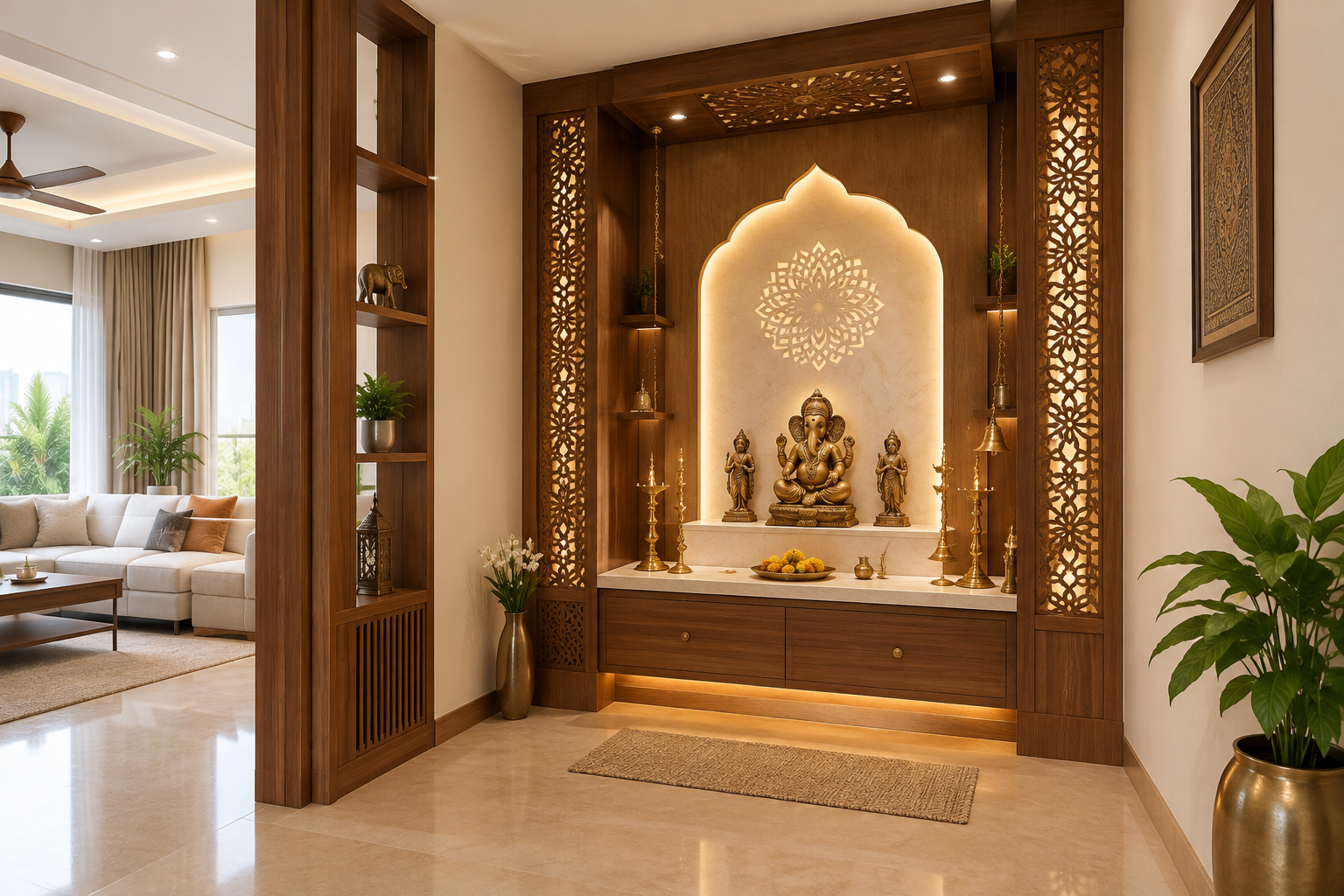
Puja Room Interior Design: Create a Peaceful and Elegant Sacred Space
A puja room is more than another space within an Indian home. It is a place for prayer, reflection, family traditions, and quiet moments. Because of its spiritual importance, the room should feel peaceful while also fitting naturally into the overall home interior.
Thoughtful puja room interior design combines traditional elements with modern functionality. From the placement of the mandir and choice of materials to lighting, storage, colours, and decorative details, every element can contribute to a balanced atmosphere.
For homeowners in Patna and across India, a professionally planned puja room interior can also make better use of available space, whether you have a dedicated prayer room, a compact apartment corner, or an integrated mandir within the living area.
Why Puja Room Interior Design Matters
A well-planned puja room creates an environment that feels calm, organized, and suitable for daily rituals. Unlike a conventional living or bedroom space, a prayer area has specific functional and cultural requirements. The design needs to accommodate idols, religious books, diyas, incense, flowers, lamps, and other essentials while keeping the space uncluttered.
Good puja room interior design should balance:
- Spiritual requirements
- Available space
- Storage needs
- Lighting
- Ventilation
- Material durability
- Aesthetic appeal
- Ease of cleaning
- Overall home décor
When these elements work together, the puja room becomes an intentional part of the home’s design rather than an afterthought.
Popular Puja Room Design Ideas for Modern Homes
Today’s homeowners have many options when creating a sacred space. A traditional wooden mandir may work beautifully in a large home, while a compact wall-mounted unit may be more practical for an apartment.
Here are some ideas to consider when planning your puja room design.
1. Traditional Wooden Mandir
Wood remains a popular choice for traditional Indian prayer spaces. A carved wooden backdrop, small pillars, jaali panels, bells, and decorative shelves can create a classic temple-inspired appearance. Natural wood tones also bring warmth into the room.
For a contemporary home, the traditional structure can be combined with simple flooring and subtle lighting to prevent the space from appearing overly decorative.
2. Marble Puja Room
Marble creates a clean and sophisticated appearance. A marble platform can provide a durable base for idols, while marble wall panels can create an elegant backdrop. White or light-coloured marble can also make a smaller prayer area feel brighter.
Homeowners who prefer a luxurious aesthetic can combine marble with carefully selected brass accents and warm lighting.
3. Wall-Mounted Puja Unit
Wall-mounted mandirs are particularly useful in apartments and compact homes.
Instead of dedicating an entire room, a designer can create a small prayer zone using:
- Floating shelves
- Decorative back panels
- Compact drawers
- Jaali screens
- Small cabinets
- Integrated lighting
This approach maximizes vertical space while keeping the floor area available for other purposes.
4. Jaali Partition Puja Space
A jaali partition can separate the prayer area without completely closing it off from the rest of the home. Intricate patterns can provide a traditional appearance while allowing light and air to pass through. Wooden, MDF, metal, or other suitable materials can be selected according to the home’s interior style.
This is especially useful when creating a puja area in a living room.
5. Glass-Door Puja Unit
Glass doors can create a refined and contemporary puja room interior. They help protect idols and decorative elements from dust while allowing the mandir to remain visible. Frosted, clear, fluted, or patterned glass can be considered depending on the desired appearance.
A compact cabinet with internal shelves can also provide hidden storage for incense, prayer books, lamps, and other items.
Designing a Puja Room for Small Spaces
Not every home has space for a separate prayer room. However, limited space does not mean homeowners need to compromise on creating a beautiful and peaceful worship area.
A compact puja room design can be incorporated into a living room, hallway, dining area, or another suitable section of the home.
Use Vertical Space
Wall-mounted shelves and tall storage units can provide more functionality without taking up valuable floor space.
Choose a Compact Mandir
A custom-designed mandir can be created according to the exact dimensions of the available wall or corner.
Consider Sliding or Folding Doors
Sliding or folding doors can conceal the prayer area when it is not being used. They can also help maintain a clean appearance in multipurpose rooms.
Integrate the Mandir with Existing Furniture
A puja unit can be incorporated into a TV console, storage wall, or living-room partition when the layout permits.
Keep the Décor Simple
A small prayer area can look more spacious when unnecessary decorative elements are minimized. Focus on the mandir, idols, lighting, and a few meaningful accents.
Space-efficient prayer designs are increasingly useful in modern apartments, where wall-mounted units, corner installations, and sliding-door solutions can make a sacred area practical without requiring a separate room.
Vastu Considerations for Puja Room Design
Many Indian homeowners consider Vastu principles while planning their prayer spaces. While individual beliefs and requirements vary, traditional Vastu guidance often influences the orientation, placement, colours, and arrangement of a puja room.
Homeowners may consider:
- Selecting a suitable location within the home
- Keeping the prayer area clean and organized
- Avoiding unnecessary clutter around the mandir
- Providing adequate natural or artificial light
- Maintaining good ventilation
- Positioning idols thoughtfully
- Using calming colours and natural-looking materials
Vastu preferences should be discussed during the planning stage rather than added after the design has already been finalized.
A professional designer can help incorporate the homeowner’s preferences while ensuring that the room remains practical and visually consistent with the rest of the home.
Choosing the Right Materials for a Puja Room Interior
Material selection plays an important role in the appearance and longevity of the prayer space.
Wood
Wood is suitable for homeowners who prefer a traditional or warm aesthetic. It can be used for mandirs, shelves, doors, panels, and storage units.
Marble
Marble offers a premium appearance and works particularly well for altar platforms and flooring.
Glass
Glass can create a lighter, contemporary appearance and works well for doors and display cabinets.
Metal
Brass and other decorative metals can add traditional character through bells, lamps, handles, borders, and other accents.
Tiles
Decorative tiles can be used to create a distinctive backdrop behind the mandir. They are also relatively easy to maintain.
Engineered Wood
Engineered wood can offer flexibility for customized storage and cabinetry. Laminate finishes can provide a range of colours and textures to match the surrounding interiors.
The right material depends on the overall design, budget, maintenance requirements, and desired aesthetic.
Lighting Ideas for a Beautiful Puja Room
Lighting can completely change the atmosphere of a prayer space. The objective should be to provide sufficient illumination while creating a warm and peaceful environment.
Warm Ambient Lighting
Soft warm lighting can create a relaxing atmosphere for morning and evening prayers.
Backlit Panels
A backlit wall panel behind the idols can create a subtle focal point.
LED Strip Lighting
LED strips can be installed beneath shelves, around panels, or along architectural details to highlight the mandir.
Pendant or Decorative Lamps
Traditional-inspired pendant fixtures can add visual interest when used appropriately.
Natural Light
Whenever possible, natural light can make the space feel fresh and welcoming. Lighting should also be planned around practical activities such as reading religious books, arranging flowers, cleaning the mandir, and performing rituals.
Colour Schemes for Puja Room Interior Design
Colours influence the visual character of a room.
For a peaceful puja room interior, homeowners can consider shades such as:
- White
- Ivory
- Cream
- Beige
- Light yellow
- Soft peach
- Pastel green
- Light wood tones
Gold and brass accents can add warmth without overwhelming the room. A neutral background can also make decorative elements, idols, flowers, and lamps stand out naturally.
The colour palette should ideally complement the rest of the home’s interior rather than making the prayer room appear disconnected from the surrounding spaces.
Storage Solutions for Puja Rooms
Storage is often overlooked during puja room interior design, but it can make a significant difference to everyday usability.
A well-designed storage system can accommodate:
- Incense sticks
- Camphor
- Diyas
- Prayer books
- Flowers
- Decorative items
- Puja utensils
- Festival accessories
- Cleaning supplies
Drawers below the altar can keep smaller items organized, while vertical cabinets can store larger objects. For compact homes, hidden storage is particularly useful because it keeps the visible area clean and peaceful.
Creating a Modern Yet Traditional Puja Room
Modern homeowners do not necessarily have to choose between traditional and contemporary styles.
A balanced design can combine both. For example, a contemporary apartment could feature a minimalist wooden mandir with traditional brass lamps. A modern marble backdrop could be paired with carved jaali details. A sleek wall-mounted unit could incorporate traditional motifs without appearing overly ornate.
This combination allows the prayer space to respect cultural traditions while fitting naturally into a modern home. DecorID’s interior design approach includes space planning, 2D drawings, 3D visualization, and material selection, which can help homeowners visualize how a customized puja area will fit into the broader interior scheme.
Common Mistakes to Avoid in Puja Room Design
Even a beautiful design can become inconvenient if practical requirements are overlooked.
Ignoring Available Space
A large mandir in a small room can make the area feel cramped. Always design according to the actual dimensions.
Using Too Much Decoration
Too many decorative elements can create visual clutter and make cleaning difficult.
Poor Lighting
A dark prayer room can feel less inviting. Plan ambient and accent lighting together.
Insufficient Storage
Without dedicated storage, everyday puja items can quickly make the space look disorganized.
Choosing Difficult-to-Maintain Materials
Consider how easily surfaces can be cleaned before selecting intricate finishes or textures.
Forgetting Ventilation
Incense and diyas can generate smoke and heat. Proper ventilation is important for maintaining a comfortable environment.
Ignoring the Overall Home Interior
The puja room should feel like a natural extension of the home’s design while maintaining its distinct spiritual character.
Why Choose DecorID for Puja Room Interior Design?
Creating a meaningful prayer space requires more than selecting a beautiful mandir from a catalogue. Every home has different dimensions, family requirements, design preferences, and storage needs.
DecorID focuses on customized interior solutions that combine aesthetics and functionality. Its interior design services include space planning, detailed 2D drawings, realistic 3D visualization, and material and finish selection.
For homeowners looking for puja room interior design, professional planning can help with:
- Customized layouts
- Space optimization
- Material selection
- Lighting planning
- Storage integration
- Traditional and modern design combinations
- 2D planning
- 3D visualization
- Coordination with the overall home interior
DecorID also positions its Patna puja room design services around creating serene spaces that combine traditional values with modern aesthetics.
How to Plan Your Puja Room Interior with DecorID
The design process can begin with understanding your home’s available space and your expectations for the prayer area.
Step 1: Discuss Your Requirements
Share your preferred style, number of idols, storage requirements, family traditions, and budget.
Step 2: Evaluate the Space
The designer can assess dimensions, existing furniture, lighting, ventilation, and the surrounding interior.
Step 3: Develop the Layout
A suitable layout can be planned around the mandir, seating, storage, and circulation space.
Step 4: Visualize the Design
2D drawings and 3D visualization can help you understand the proposed design before execution.
Step 5: Select Materials and Finishes
Choose wood finishes, marble, tiles, glass, lighting, colours, hardware, and decorative details.
Step 6: Execute the Design
Once the design is finalized, the planned elements can be executed with attention to dimensions, finishes, and overall quality.
Create a Peaceful Puja Room for Your Home
A well-designed puja room can become one of the most meaningful spaces in an Indian home. It should provide a peaceful setting for prayer while also meeting practical requirements such as storage, lighting, ventilation, and easy maintenance.
Whether you prefer a traditional wooden mandir, an elegant marble prayer room, a compact wall-mounted unit, or a contemporary puja space integrated into your living room, the right puja room design can make the area both beautiful and functional.
Thoughtful puja room interior design brings together tradition, personal preferences, and modern interior planning. With professional guidance, even a compact corner can be transformed into a serene space that complements the rest of your home.
Create Your Ideal Puja Room with DecorID
Ready to transform your prayer space?
Contact DecorID today to discuss your puja room interior design requirements. From space planning and material selection to 2D layouts and 3D visualization, DecorID can help you create a customized puja room interior that reflects your style, respects tradition, and fits beautifully into your home.
Add a comment