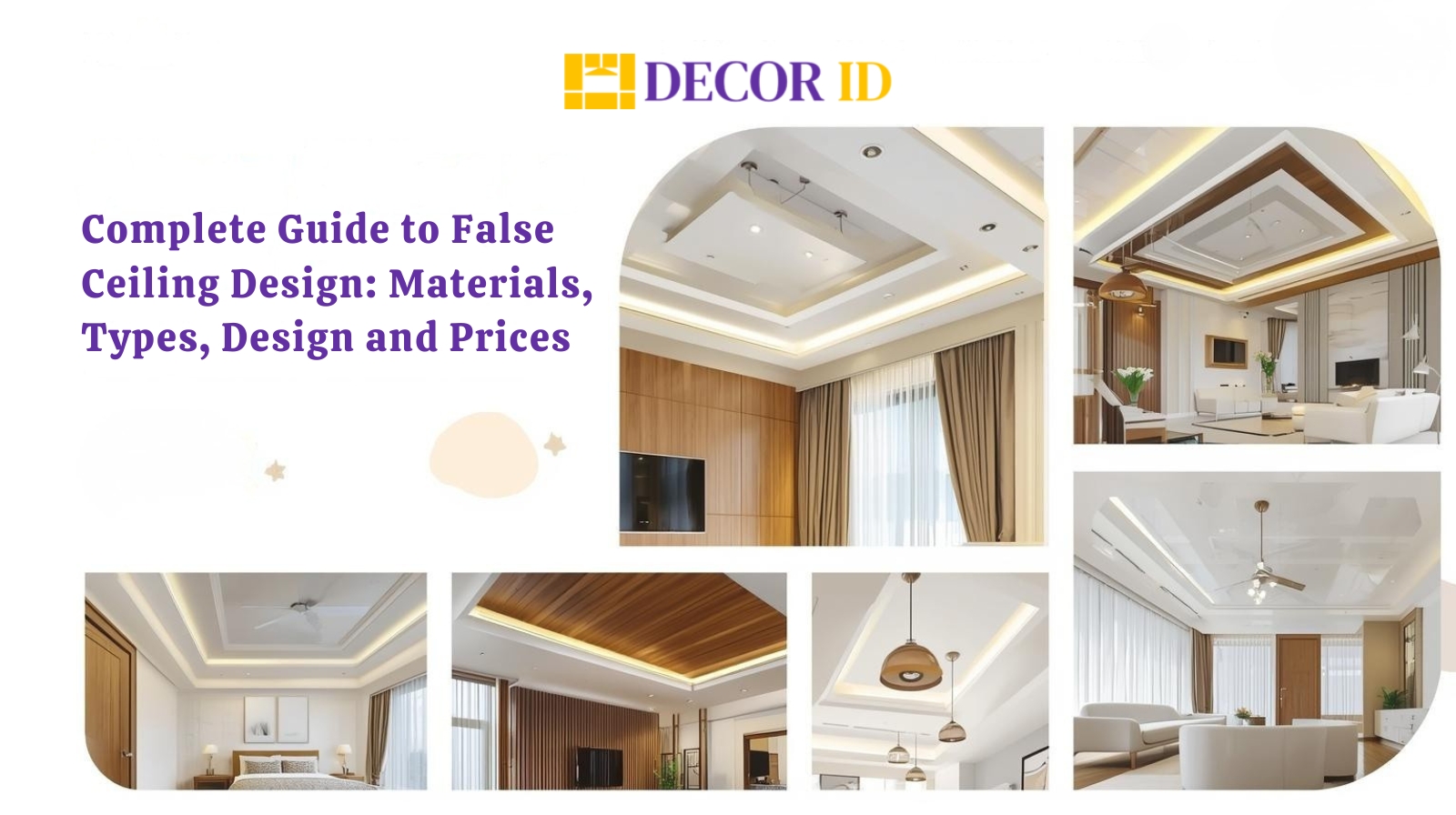
False ceilings have become an essential architectural element in modern Indian homes rather than a decorative afterthought. For homeowners planning False Ceiling Designing in Patna, the focus today is on performance, durability, lighting efficiency, and long-term maintenance rather than ornamental excess.
With apartment sizes getting smaller and energy-efficient options becoming increasingly essential, a false ceiling is critical to improving indoor thermal comfort by concealing mechanical services, managing light levels, and providing better spatial balance. cities like Patna, which experience extreme levels of heat, dust, and humidity have a tremendous influence on how long items last inside your home, therefore selecting the right type of ceiling will significantly affect the overall comfort you enjoy in your daily life.
This blog will provide you with various factual information regarding materials, types, design strategies, price structures, and how to put up false ceilings so that you can make an educated decision that fits within the reality of your life in India and a reasonable budget.
Why False Ceiling Design Is Important for Indian Homes
False ceilings influence how a home feels, functions, and performs over time. Beyond aesthetics, they impact:
- Indoor temperature regulation
- Lighting efficiency and glare reduction
- Concealment of wiring, ducts, and pipelines
- Acoustic comfort in living spaces
As reported recently by the Bureau of Energy Efficiency, India, residential lighting and cooling use between 35% and 40% of all residential electricity. The design of a ceiling can increase the amount of light diffused and decrease the amount of heat transferred from concrete slabs to lower the amount of electricity consumed.
In the climate of Patna, which is hot during summer, humid at certain times of year, and contains dust, a false ceiling must have a sound structural integrity and a high level of moisture resistance to perform effectively over time. It is common for poor selection of materials or construction methods to result in a false ceiling with sagging, cracking, or discolouration within just a few years.
What Is a False Ceiling and How Does It Work?
A false ceiling, also known as a suspended ceiling, is installed below the structural slab using a metal framework. The gap between the slab and ceiling panel is used to manage electrical, mechanical, and lighting systems.
Core Components of a False Ceiling System
- Framework: GI or aluminum channels fixed to the slab
- Board or Panels: Gypsum, POP, metal, PVC, or wood-based boards
- Finishing Layer: Paint, laminate, veneer, or textured coating
This layered structure allows flexibility in design while improving functionality and ease of maintenance.
Which Rooms Benefit Most from False Ceilings?
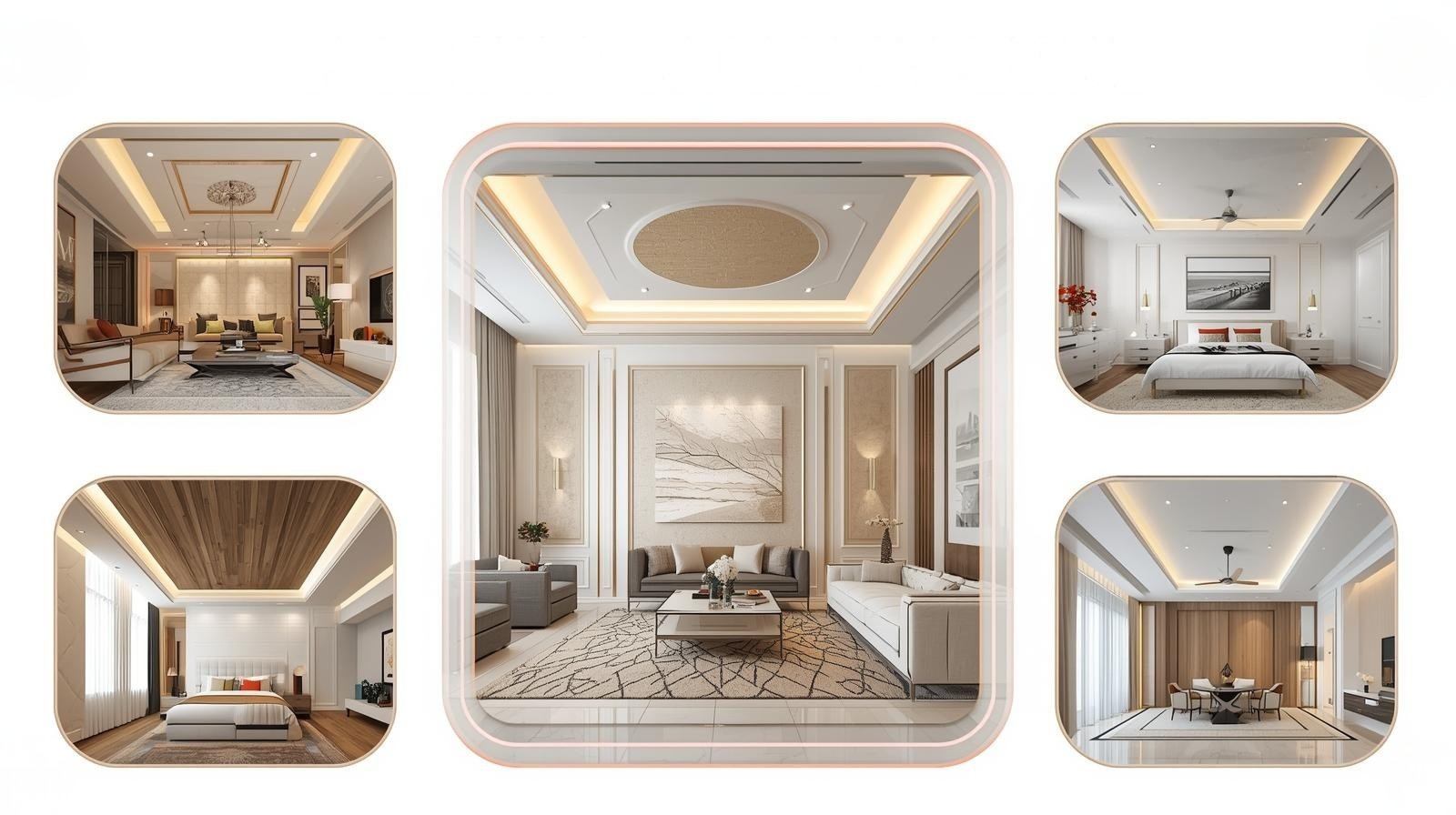
False ceilings should be planned selectively rather than uniformly across a home.
Living Rooms
Living rooms benefit most from false ceilings as they support layered lighting, hide electrical wiring, improve visual zoning, reduce glare, and enhance long-hour comfort for family gatherings and entertainment.
Bedrooms
Bedrooms use false ceilings to soften harsh lighting, create a calm sleeping environment, improve thermal insulation from roof heat, and support indirect lighting that promotes relaxation and better sleep quality.
Kitchens
Kitchens require moisture- and heat-resistant false ceiling materials to handle steam, cooking heat, and oil vapors, preventing sagging, discoloration, and long-term structural damage.
Bathrooms
Bathrooms benefit from functional false ceilings that conceal exhaust ducts and plumbing lines while allowing easy access panels for maintenance, improving cleanliness, ventilation, and overall bathroom aesthetics.
What Materials Are Used in False Ceiling Design?
Material selection plays a crucial role in false ceiling performance, maintenance, and lifespan. For False Ceiling Designing in Patna, materials must resist heat, dust accumulation, and seasonal humidity while supporting lighting fixtures. Commonly used options include gypsum boards, POP, PVC panels, metal ceilings, and fiber boards, each chosen based on room usage, moisture exposure, durability needs, and long-term maintenance requirements.
Gypsum Board False Ceiling
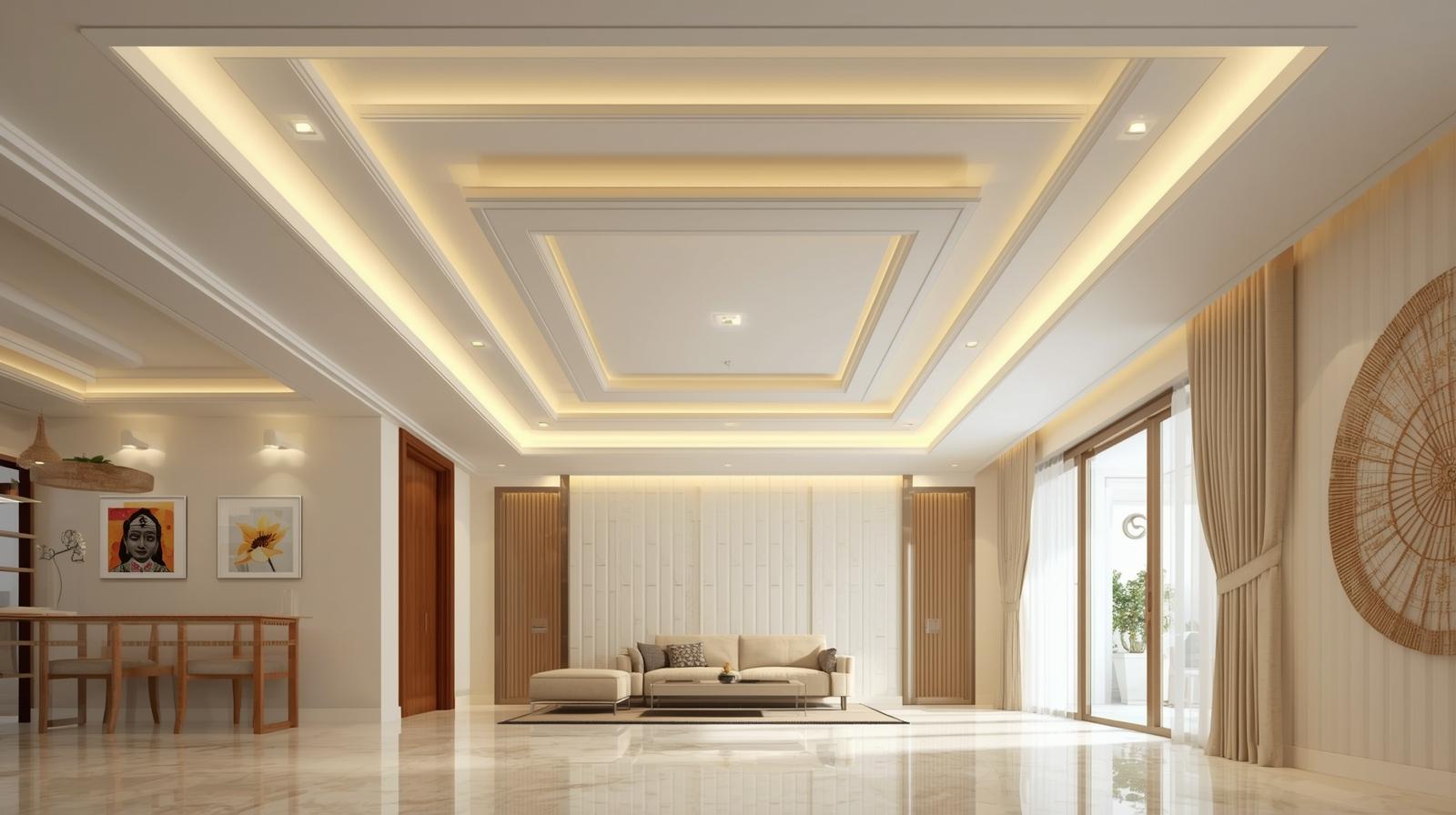
Gypsum board is the most widely preferred false ceiling material in Indian residential interiors due to its clean finish and design flexibility. It supports both simple and complex ceiling patterns, making it suitable for modern homes.
Advantages
- Provides a smooth, uniform surface that enhances overall ceiling aesthetics
- Easily moulded into curves, layers, and geometric designs
- Offers inherent fire-resistant properties, improving indoor safety
- Works well with recessed lights and concealed wiring systems
Limitations
- Standard gypsum is sensitive to moisture and requires moisture-resistant variants in kitchens or bathrooms
- Installation demands skilled workmanship for long-term durability
When installed correctly under suitable conditions, gypsum false ceilings typically last 10–12 years with minimal maintenance.
Plaster of Paris (POP) Ceiling
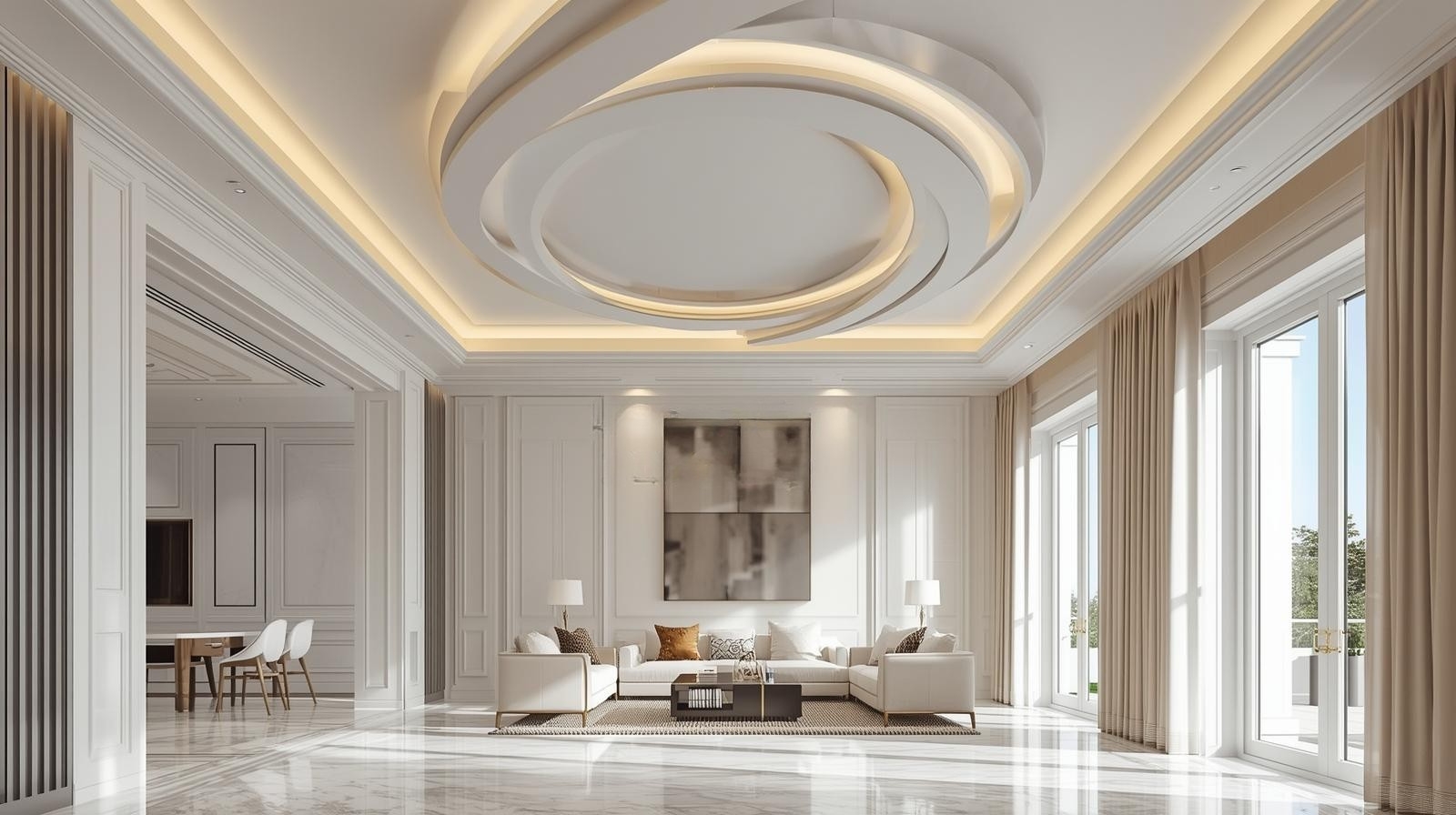
Plaster of Paris ceilings are created by mixing the material on-site and shaping it manually, allowing a high degree of customization in residential interiors. This method has traditionally been popular in Indian homes.
Advantages
- Creates a seamless and joint-free ceiling surface
- Allows easy formation of curves, cornices, and intricate custom detailing
- Suitable for decorative ceiling designs where flexibility is required
Limitations
- More prone to hairline cracks as the structure settles over time
- Performs poorly in humid conditions and absorbs moisture easily
- Requires frequent repainting and periodic repairs
Residential maintenance audits indicate that POP ceilings often need 30–40% earlier repairs compared to gypsum ceilings in high-humidity regions, increasing long-term upkeep costs.
Metal False Ceilings
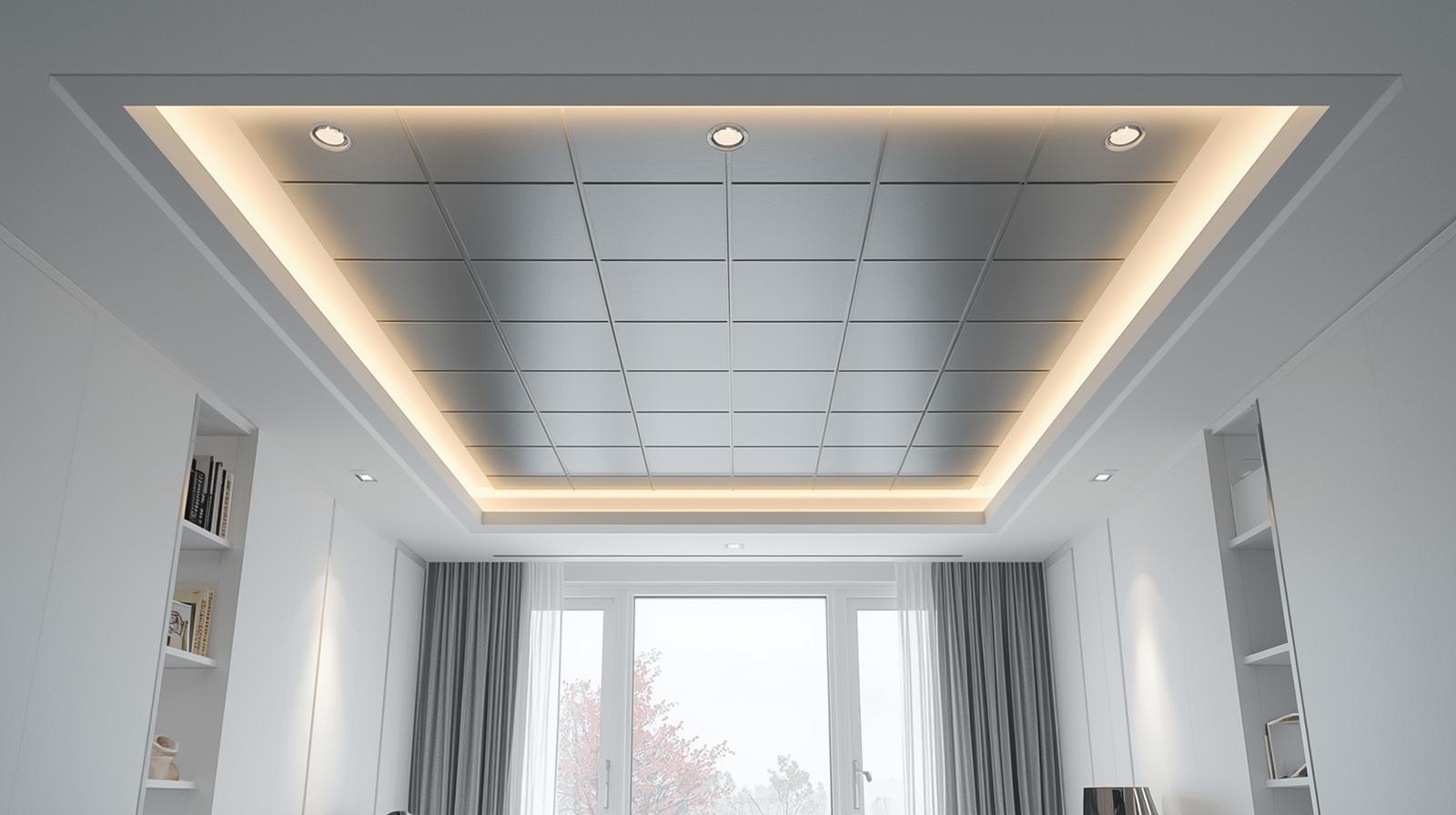
Metal false ceilings are primarily chosen for their strength, durability, and low-maintenance performance, especially in functional areas of residential homes.
Advantages
- Highly resistant to moisture, corrosion, and termite damage
- Allows easy access to wiring, plumbing, and ducts through removable panels
- Maintains structural integrity even in high-heat and high-humidity zones
Limitations
- Has a more industrial or commercial visual appeal
- Limited decorative flexibility compared to gypsum or POP
- Higher initial installation cost than traditional ceiling materials
Metal false ceilings are commonly used in kitchens, bathrooms, balconies, and utility areas where durability and service access are more important than decorative aesthetics.
Wooden and MDF Ceilings
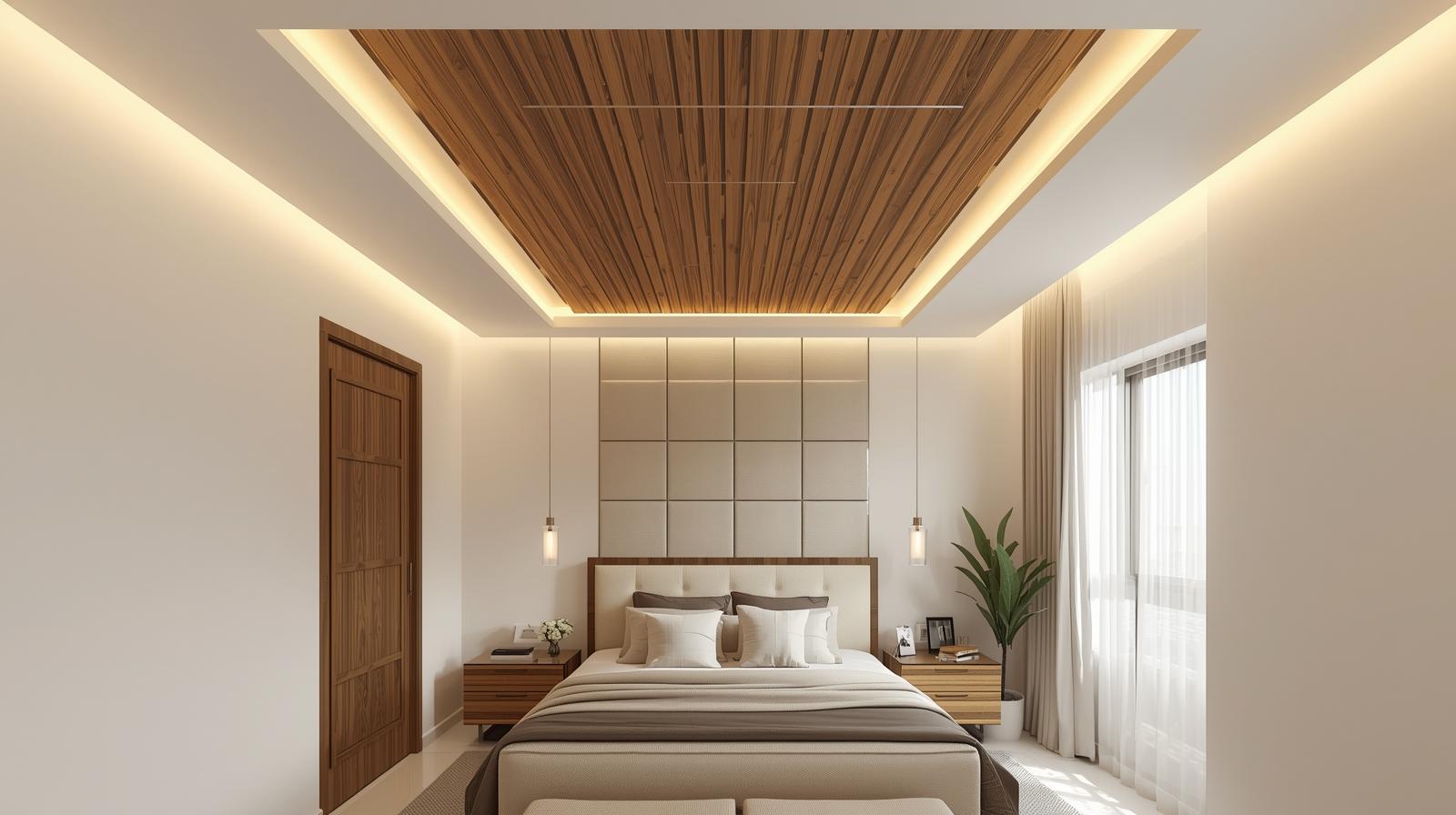
Wooden and MDF ceilings are mostly used as accent or feature ceilings to enhance visual appeal rather than full-home applications.
Advantages
- Creates a warm, rich, and premium visual aesthetic
- Adds texture, depth, and character to selected ceiling zones
- Complements modern, luxury, and traditional interior themes effectively
Limitations
- Higher material and installation costs compared to gypsum or POP
- Requires proper termite treatment and moisture protection
- Not suitable for high-humidity areas without specialized coatings
Wooden and MDF ceilings are best suited for living rooms, dining areas, and focal sections where design impact is prioritized over cost efficiency.
PVC False Ceilings
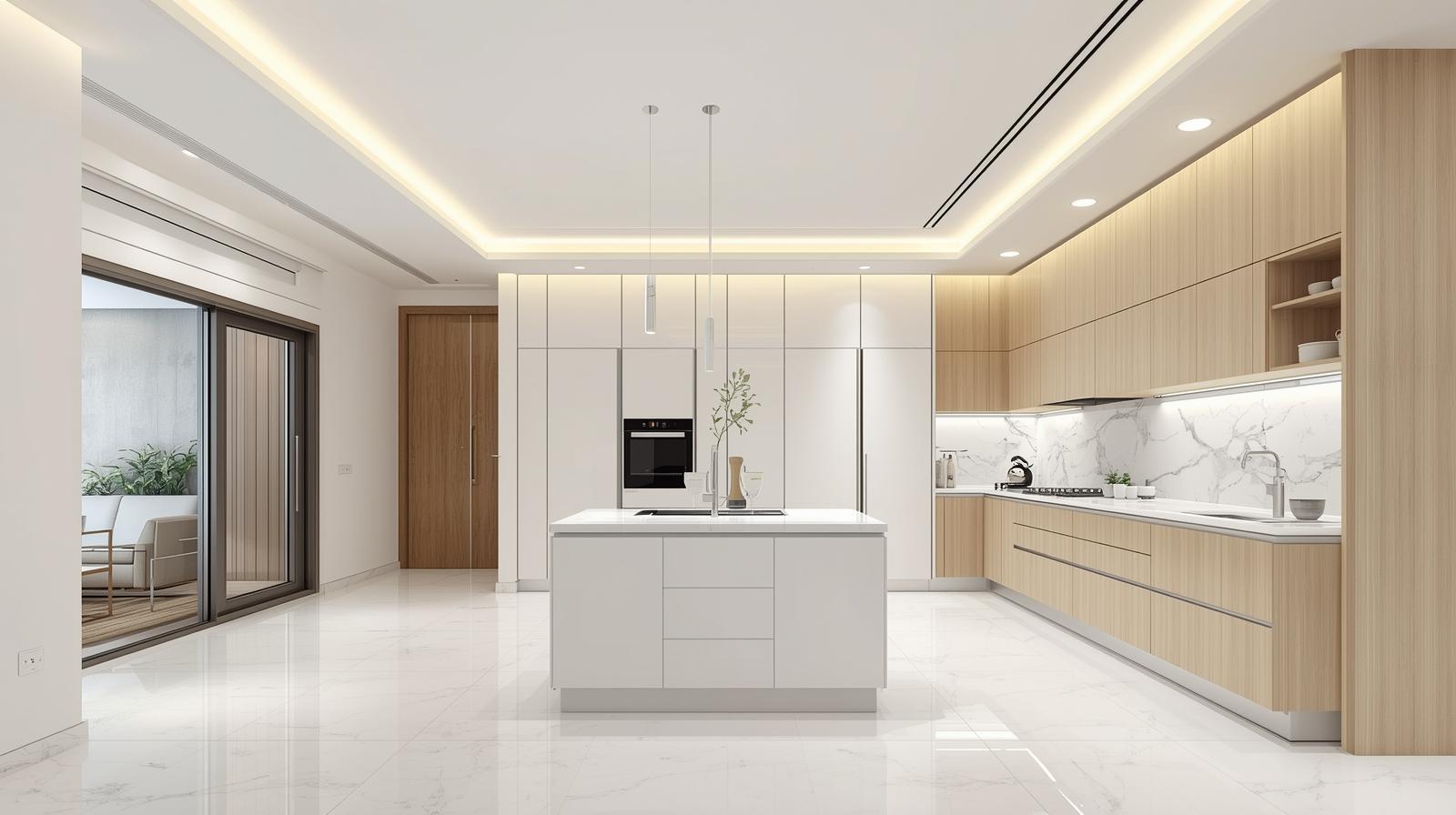
PVC false ceilings are widely used in budget-conscious residential and utility spaces where functionality and moisture resistance are the top priorities.
Advantages
- Completely waterproof, making them suitable for humid and wet areas
- Requires minimal maintenance and is easy to clean
- Lightweight and quick to install, reducing labor time
Limitations
- Limited design flexibility compared to gypsum or POP
- Lower heat resistance, making them unsuitable near high-temperature zones
- Premium aesthetic depth is difficult to achieve with PVC finishes
PVC ceilings are commonly recommended for bathrooms, balconies, and utility areas where durability matters more than decorative detailing.
Comparison of False Ceiling Materials
| Material | Durability | Moisture Resistance | Average Cost (₹/sq ft) |
|---|---|---|---|
| Gypsum | High | Medium | 90–130 |
| POP | Medium | Low | 80–120 |
| Metal | Very High | Very High | 150–250 |
| PVC | Medium | High | 100–140 |
| Wood/MDF | High | Low | 250–500 |
What Types of False Ceiling Designs Are Common?
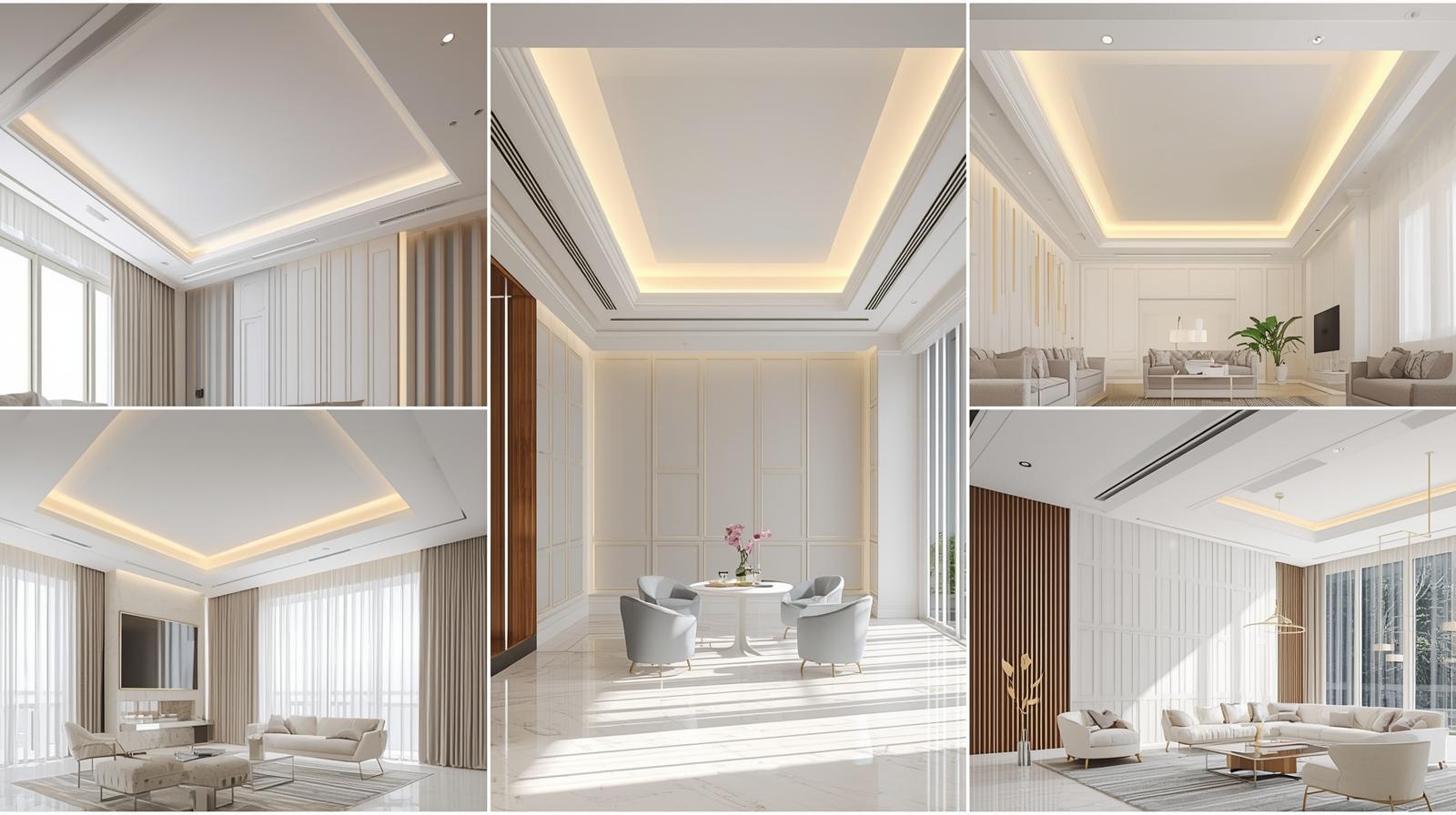
Flat Single-Layer Ceilings
When there isn’t enough vertical space in an area, having a flat ceiling with only one layer creates more headroom but also gives you a smooth, even surface. A flat ceiling in one layer is compatible with modern, minimalist interiors and allows for easy cleaning and maintenance and extended life.
Multi-Layer Ceilings
Creating depth and visually zoning various areas of a room can use multiple-layer ceilings with oblique planes. They provide support for layered lighting arrangements and allow delineation of seating, dining, or working areas without using actual walls.
Cove Ceilings
Cove ceilings incorporate hidden LED lighting within recessed edges, producing soft, indirect illumination. This reduces glare, enhances visual comfort, and creates a relaxed ambiance suitable for living rooms and bedrooms.
Floating Ceilings
Floating ceilings appear visually suspended, adding dimension without heavy ornamentation. Perimeter lighting highlights the separation, making spaces feel modern, spacious, and architecturally refined.
How Does Lighting Integration Work?
Lighting should be planned before ceiling execution.
Three-Layer Lighting Strategy
- Ambient lighting: General illumination
- Task lighting: Functional areas
- Accent lighting: Visual depth
Research indicates indirect lighting reduces eye strain by up to 25% compared to direct glare lighting.
How Much Does False Ceiling Cost in Patna?
Pricing depends on material, design complexity, and electrical integration.
Approximate Cost Range
| Ceiling Type | Cost (₹/sq ft) |
|---|---|
| Basic Gypsum | 90–110 |
| Cove Lighting | 120–150 |
| Multi-Layer Design | 140–180 |
| Wooden Accents | 300+ |
These figures align with prevailing interior design services in Patna, where labor availability and material sourcing influence final pricing.
Common Mistakes to Avoid
- Overdesigning low ceilings
- Ignoring access panels
- Using untreated metal frameworks
- Poor joint finishing
Residential audits show over 60% of ceiling failures are caused by framework errors, not material quality.
Climate Considerations for Patna Homes
False ceilings in Patna must account for:
- High summer temperatures
- Seasonal humidity
- Dust accumulation
Moisture-resistant boards and anti-rust treated frameworks are essential for longevity.
Ideal Ceiling Height After Installation
After installing your false ceiling, you should aim for a finished height of at least eight feet. This will allow for optimum air circulation while preventing heat from being trapped at the ceiling and making the room feel visually balanced. If the ceiling height is too low, then the room is going to feel small and cramped, especially in India, where the climate is hot and humid. The increased ceiling height will also provide for more even distribution of light throughout the room and will allow the ceiling to be properly sized in relation to the room’s size, thereby improving the long-term comfort and use of that space.
Maintenance Requirements
Maintenance is minimal if designed correctly.
Basic care includes
- Dust cleaning every 2–3 months
- Annual inspection of joints
- Immediate repair of seepage
Installation Timeline
| Area | Time Required |
|---|---|
| Bedroom | 2–3 days |
| Living Room | 4–6 days |
| Full Apartment | 10–14 days |
Impact on Property Value
Professionally installed decorative ceilings in residences generally result in a resale price of 5-8% higher than those without, based on local urban Bihar listings. As buyers view homes as being aesthetically appealing and have greater visual illumination; thus enhancing the way they perceive and value the property will positively affect market value.
Safety and Standards
According to Indian regulations, the use of false ceiling materials in India is required to meet Bureau of Indian Standards (BIS) guidelines. Fire risk, structural performance and material quality are monitored under the National Building Code of India so that all interior installations are safe and meet current codes.
Who Should Opt for False Ceilings?
False ceilings are suitable for:
- Long-term homeowners
- Renovation projects
- Homes upgrading lighting or wiring
They are not recommended where ceiling height is already limited.
Also Read: 5 False Ceiling Lighting Ideas to Enhance the Ambience of Your Bedroom
Conclusion
A false ceiling design is an important long-term architectural consideration that directly influences comfort, energy efficiency, and maintenance. A properly built false ceiling, using high-quality materials and careful design planning, provides improved lighting, thermal comfort, and balanced spaces, while also concealing necessary services in a tidy manner.
For Homeowners planning to design a false ceiling in Patna, they should prioritize material compatibility with their climate and intended function, as well as execution quality, for long-lasting value instead of just temporary visual interest.
FAQs
1. Which false ceiling material is best for Patna homes?
Gypsum with moisture-resistant treatment works best for living areas, while metal or PVC ceilings are more suitable for kitchens and bathrooms exposed to humidity.
2. How long does a gypsum false ceiling last?
A properly installed gypsum false ceiling typically lasts 10 to 12 years with basic maintenance and timely repairs of minor cracks or seepage issues.
3. Is false ceiling suitable for small rooms?
Yes, simple flat or cove ceiling designs work well in small rooms, improving lighting comfort without making the space feel cramped or visually heavy.
4. Can AC ducts and wiring be hidden inside false ceilings?
Yes, false ceilings are commonly used to conceal AC ducts, wiring, and drainage lines safely while maintaining easy access through service panels.
5. Does a false ceiling reduce room temperature?
Indirectly, yes. False ceilings reduce heat transfer from slabs and improve cooling efficiency when combined with proper lighting placement and ventilation planning.